Food truck regulations and permits in 2026
Business, hygiene, pitches, the trailer, gas and alcohol: every food truck rule in the order you will come across it, starting with Ireland, each with its official source.
 Romain BarreauFounder of Food Truck Store · 6 min read
Food truck permits cover four areas: your business, your food, your pitch and your trailer. This page sets them out in the order you will come across them, starting with Ireland, with the official source for each rule and a link to our detailed guide where there is one. Rules change, so always check the latest version before you start.
Before you open, in this order.
In Ireland, you register your business, notify the HSE before you start trading and apply for your casual trading licence at least 30 days ahead (FSAI, Guidance Note 16, Casual Trading Act 1995). Sort out VAT and your business structure first: see our guide to food truck VAT, and for the whole process, read how to start a food truck business.
- Register your business
With Revenue as a sole trader, or as a company with the CRO; a business name is also registered with the CRO.
- Notify the HSE
Before you start, with the office for the area where the trailer is normally kept. It covers the whole country.
- Train your team
Food hygiene training suited to each role, and HACCP for whoever runs your procedures.
- Get your licence
A casual trading licence from your council, applied for at least 30 days ahead.
- Book your pitches
Markets, events, private land: through the market manager, the organiser or the owner.
Hygiene rules for mobile food sales.
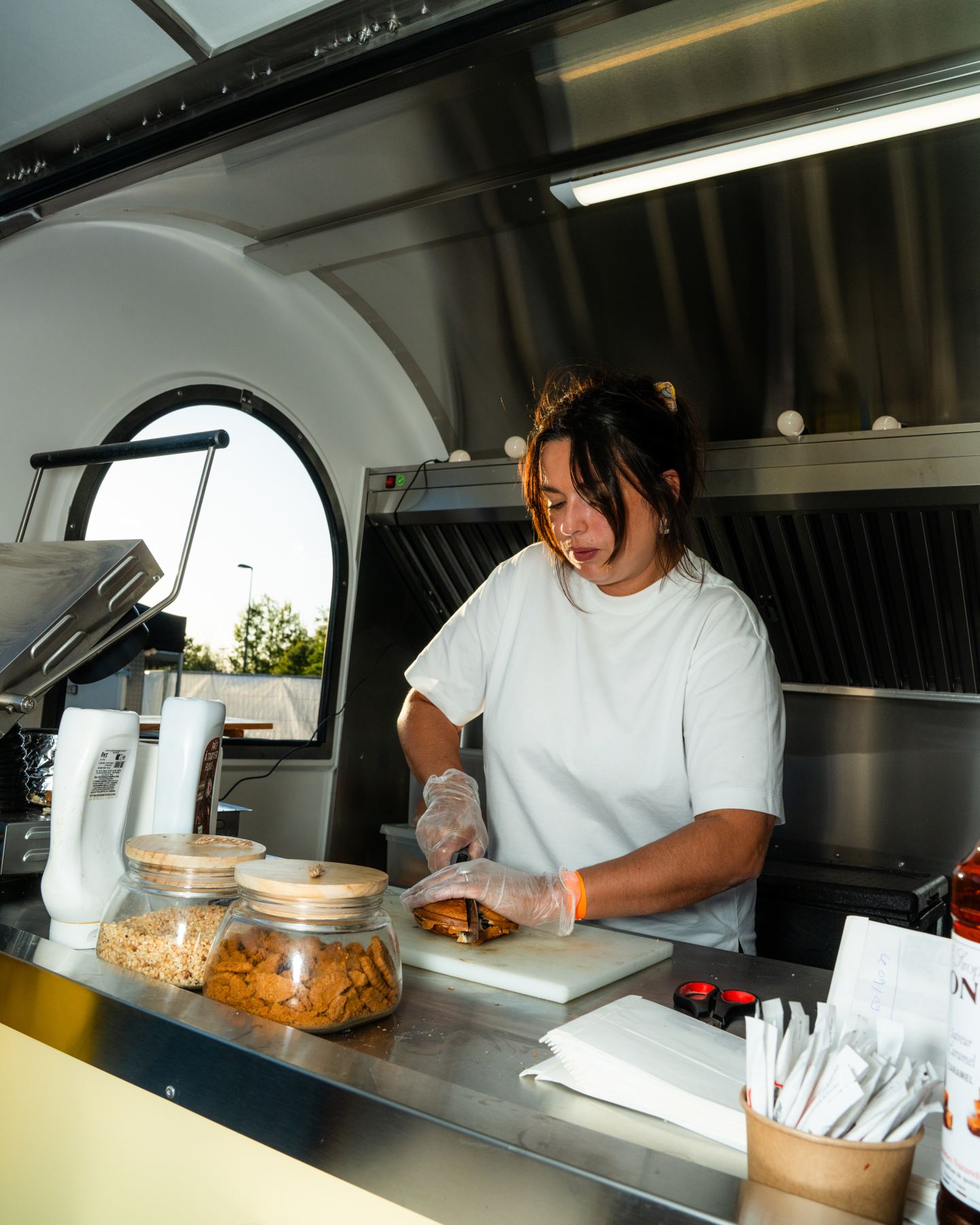
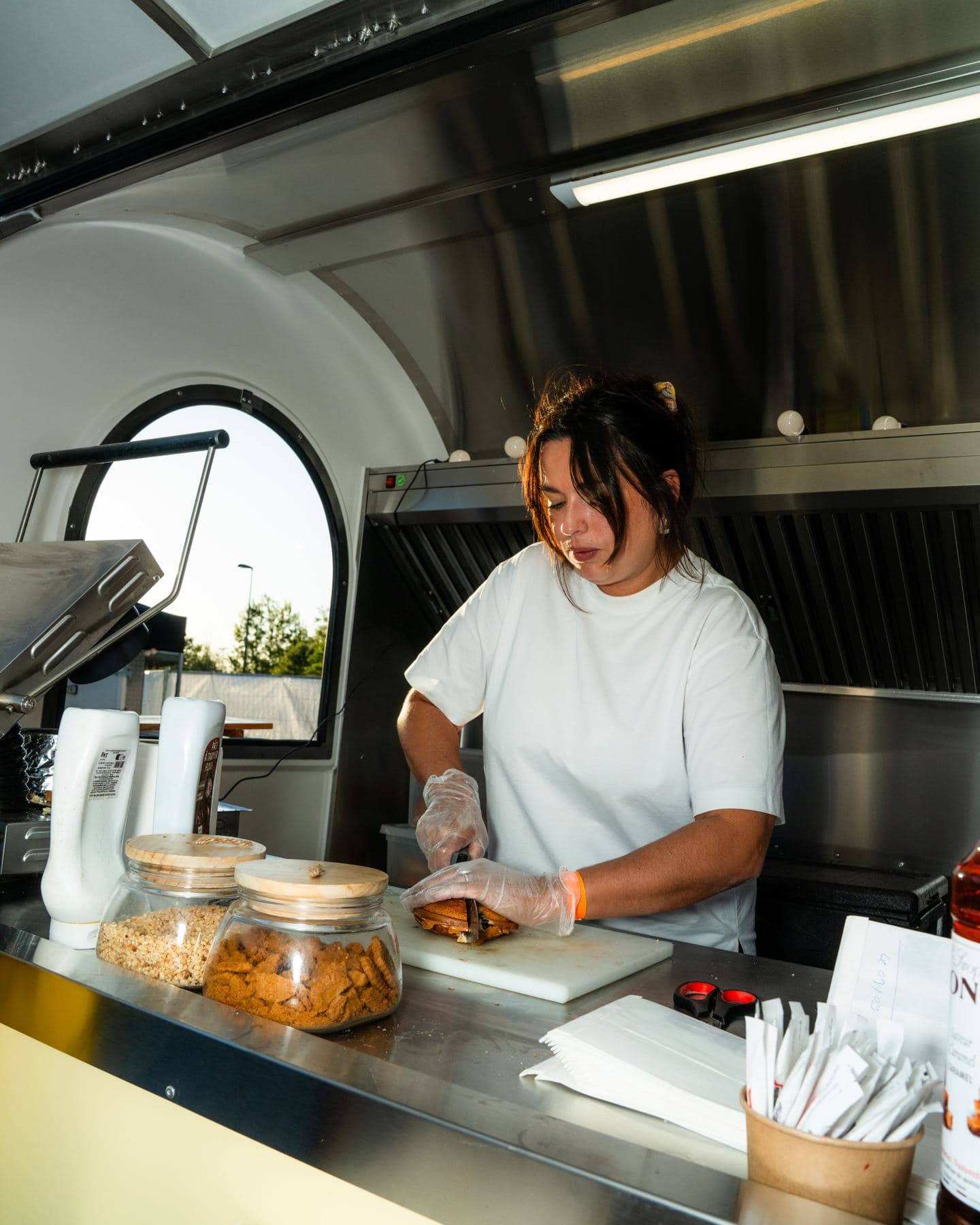
For mobile sales vehicles, EU rules require, where necessary, facilities to wash and dry hands hygienically, enough drinking water, smooth and washable food surfaces, temperature control and hygienic waste disposal (Regulation (EC) 852/2004, annex II, chapter III). In Ireland, a movable food trailer must be purpose built or properly converted, with a canopy over appliances that give off heat and steam, and its waste water must drain into a covered container (FSAI, Guidance Note 16, section 5.2). Every Food Truck Store trailer comes with stainless steel worktops and an automatic sink as standard.
Stainless steel, gloves and a fridge within reach: good hygiene shows at the workstation.
Where to sell, and who decides.
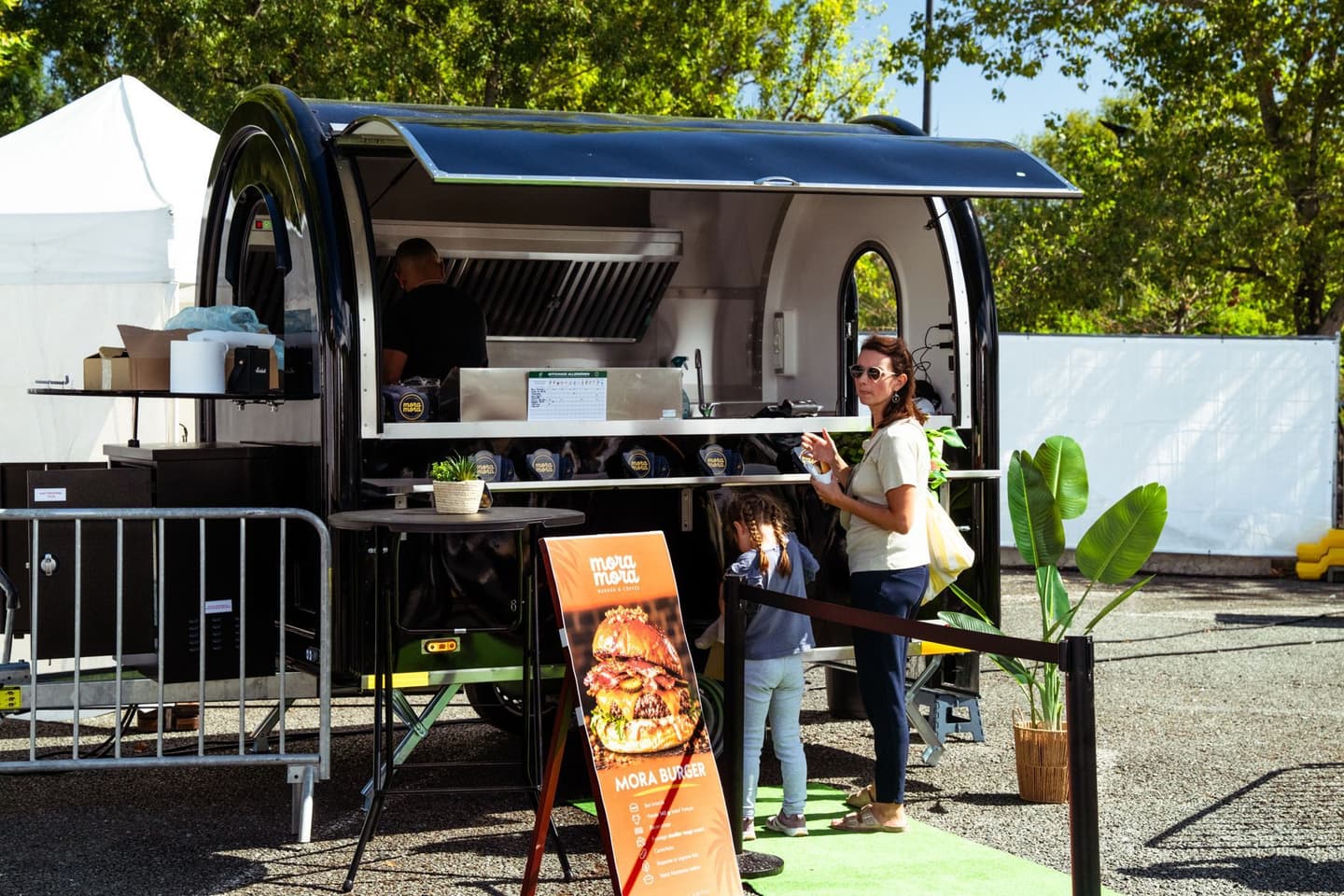
On public land, you need permission from the relevant authority: a casual trading licence from the council in Ireland, a police permit in Sweden, a municipal authorisation in Spain or Italy, as our food truck licence guide explains. At markets the manager allocates pitches, at events the organiser does, and on private land the owner gives written permission. Our guide to food truck pitches covers each case in detail.
- Public landA licence or permit from the council, the town or the police, for a fee.
- MarketsA pitch by the day or for the season, from the town or the market manager.
- EventsThe organiser sets the pitch and the fee.
- Private landThe owner’s written agreement, and the other rules still apply.

The trailer: registration and driving licence.
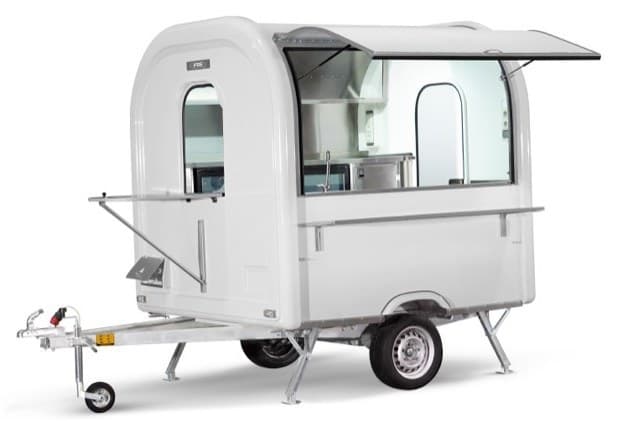
A conforming trailer with its European Certificate of Conformity cannot be refused registration in any EU country (Regulation (EU) 2018/858); in Ireland, a light trailer of up to 3,500 kg is neither registered nor taxed, but one sold new since 2012 must be plated and type approved (RSA). A category B licence covers a trailer of up to 750 kg, such as our AIR 220; for a heavier trailer, it depends on the combined weights and on your country (Directive 2006/126/EC). Our guide to the 750 kg food truck trailer has the details.
- 750 kgour AIR 220, towed on a category B licence
- 3,500 kgin Ireland, a light trailer up to this weight is neither registered nor taxed
- 80 km/hmaximum speed when towing a light trailer in Ireland
Gas and electrics: use local professionals.
EU rules cover gas appliances, but each country decides how the installation is done and checked, and who may work on it (Regulation (EU) 2016/426, art. 3(3)). In Ireland, I.S. 820, the standard for non-domestic gas installers, includes requirements for mobile catering, and according to the CRU, non-domestic gas work is reserved for Registered Gas Installers from 1 September 2026, subject to the legislation completing its passage (NSAI, CRU). Our trailers are wired for 230 V, with two power inlets for two circuits that must both be connected; the gas bottle box is an option, installed and inspected by a qualified professional in your country.
Alcohol, allergens and inspection reports.
Each country has its own rules on alcohol, from Ireland’s occasional licence, obtained through a pub, to municipal and police permits elsewhere: see our guide to selling alcohol from a food truck. For food sold unpackaged, allergen information is mandatory, and each country decides how you provide it (Regulation (EU) 1169/2011, art. 44). Some countries also make you display your latest inspection report: in Denmark, the smiley report is displayed at every point of sale, mobile units included (Fødevarestyrelsen).
Training is part of it too: our food truck course guide explains what the law actually requires, and the free Academy quiz helps you find your layout.
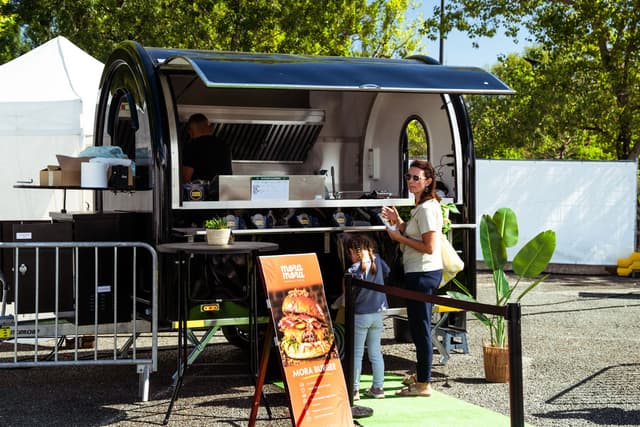
A trailer ready for inspection.
You prepare for food truck regulations well before opening day: once your business, licence and pitches are sorted, the rest happens inside the trailer. Stainless steel worktops, an automatic sink, the Chef+ hood and a European Certificate of Conformity: see our food truck trailers, from €11,500 excl. VAT.
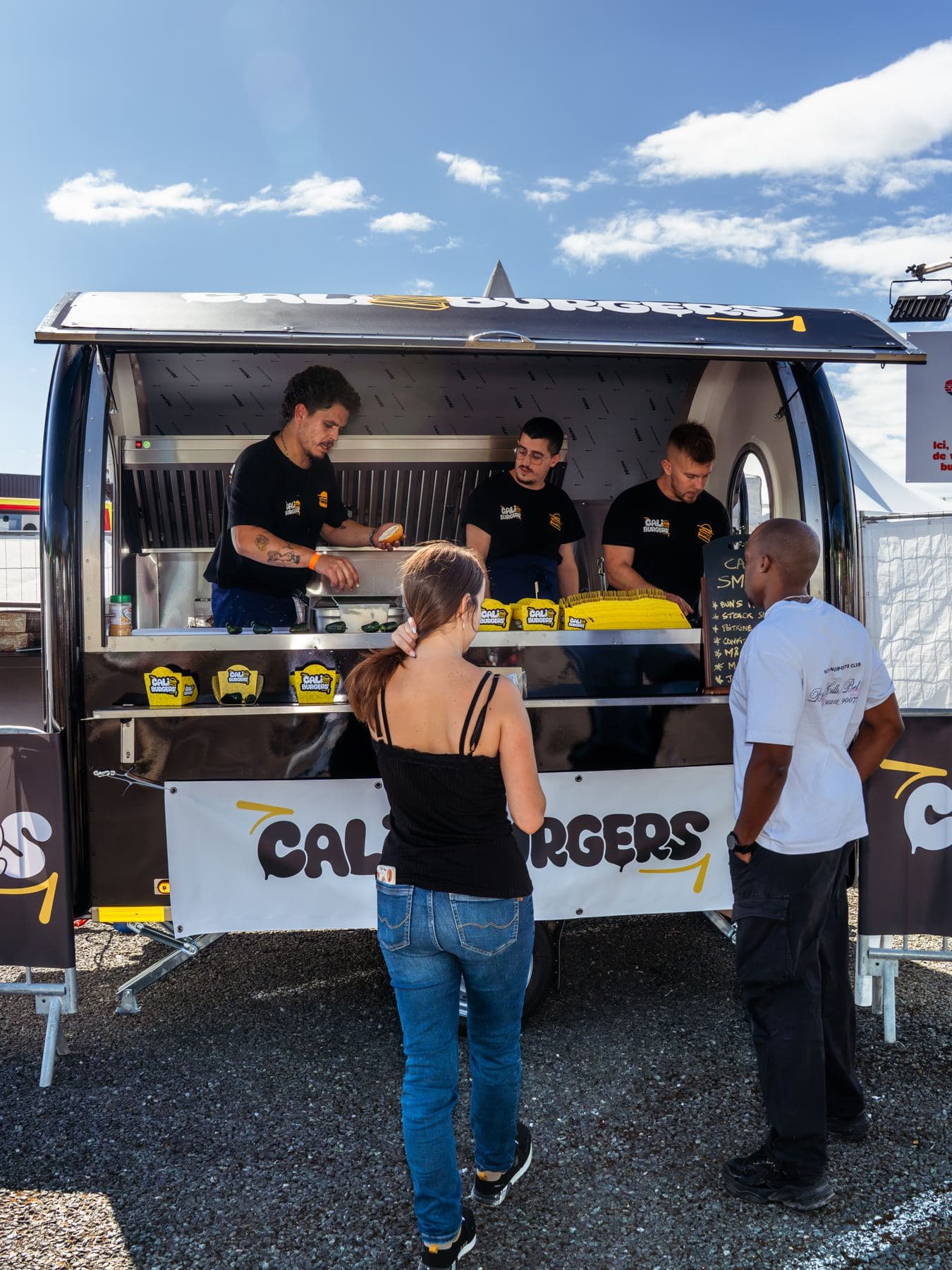
Paperwork in order, hatch open.
Your questions answered.
Got another question? Just ask us ›A business registered with Revenue, a notification to the HSE before you start, a casual trading licence from your council for public land, and elsewhere the agreement of the market manager, the event organiser or the landowner.
Ask the authority responsible for the place where you want to sell: the council in Ireland, the police in Sweden, the town hall in Spain or Italy. Apply early: at least 30 days ahead for an Irish casual trading licence.
Facilities to wash and dry hands, drinking water, washable surfaces, temperature control and hygienic waste disposal, staff trained for the work they do, and food safety procedures based on HACCP (Regulation (EC) 852/2004).
Yes. Every food business operator must notify the competent authority before trading; in Ireland, a single notification to the HSE lets you trade from the notified stall anywhere in the country.
Not up to 3,500 kg: a light trailer is neither registered nor taxed in Ireland, but one sold new since 2012 must be plated and type approved, with its Certificate of Conformity.
It depends on the country. In Ireland, only the holder of an existing on-licence can get an occasional licence for an event; elsewhere, municipal or police permits apply, as our alcohol guide explains.
 By Romain, founder