Selling alcohol from a food truck: which licence?
The occasional licence in Ireland, municipal and police permits in the Nordic countries, regional rules in the south: what each country requires to serve alcohol.
 Romain BarreauFounder of Food Truck Store · 5 min read
Can you sell alcohol from a food truck? It depends on the country, and on how and where your customers drink: there is no EU-wide food truck alcohol licence, and each country has its own rules. In Ireland, the licence for a special event, the occasional licence, is only granted to someone who already holds an on-licence: a food truck on its own does not qualify. Here is what applies in each country, and who to ask before you pull your first pint.
No single alcohol licence in Europe.
Each country runs its own alcohol licensing, through a court, the police, the municipality or a national agency, and a licence usually covers a place, an event or a period. The figures below, from the Courts Service, the Danish police, LVV and Norway’s Alcohol Act, show how far apart the rules are. Check the rules where you trade before you draw a beer tap into your plans.
- 6 daysmaximum per Irish occasional licence application
- 14 daysminimum notice to apply to the Danish police for an event permit
- 72 hoursnotice for a licence holder serving at an approved event venue in Finland
- 4 yearsmaximum term of a Norwegian municipal licence
Ireland: work with a licensed pub.
In Ireland, an occasional licence allows someone who already holds an on-licence (but not a special restaurant licence) to sell alcohol at a special event in unlicensed premises, for up to six consecutive days per application (Courts Service of Ireland). The application goes to the District Court with proof of the on-licence, the consent of the venue owner and confirmation that the Gardaí have no objection. So at an event, alcohol is sold under the licence holder’s occasional licence, not under a licence of the food truck’s own.
- Find a licence holder
Someone who already holds an on-licence, such as a pub; a special restaurant licence does not qualify.
- Get the consents
The venue owner agrees, and the Gardaí confirm they have no objection.
- Apply to the court
At least 48 hours before the court date; the HSE asks for a month’s notice.
Denmark, Sweden, Norway and Finland.
In the Nordic countries, alcohol licences come from the municipality, the police or a national agency, usually for a place or an event, and Copenhagen does not allow alcohol in mobile street trading at all (Danish Restaurant Act, City of Copenhagen). Since 1 June 2026, Sweden no longer requires meals, a kitchen or seating for a licence (City of Stockholm, temporary licences); in Finland, a licence for a vehicle sets out its route and the places where it serves (LVV).
- DenmarkA licence tied to a place; for an outdoor event, a police permit applied for at least 14 days in advance.
- SwedenIn Stockholm, a temporary licence for serving the public, for up to 30 consecutive days, with the organiser’s contract.
- NorwayA municipal licence for up to four years or for a single occasion; the ambulatory licence covers private functions only.
- FinlandA licence from LVV, the national agency; at an approved event venue, a licence holder gives 72 hours’ notice.

Spain, Italy and Portugal.
In Italy, a licence to serve food and drink covers alcoholic drinks of any strength, but on public land, alcohol may only be sold in closed containers (Legislative Decree 59/2010, art. 64, Legislative Decree 114/1998, art. 30). In Spain, the rules are regional and local: in the Madrid region, for example, mobile sales of alcohol are banned at night (Madrid Law 5/2002). In Portugal, the laws we read set no specific licence, but sales to minors are banned and, at any event venue, drinks must be served in light, non-sharp containers (Decree-Law 50/2013).
Behind the counter, the operator is responsible for every glass served.
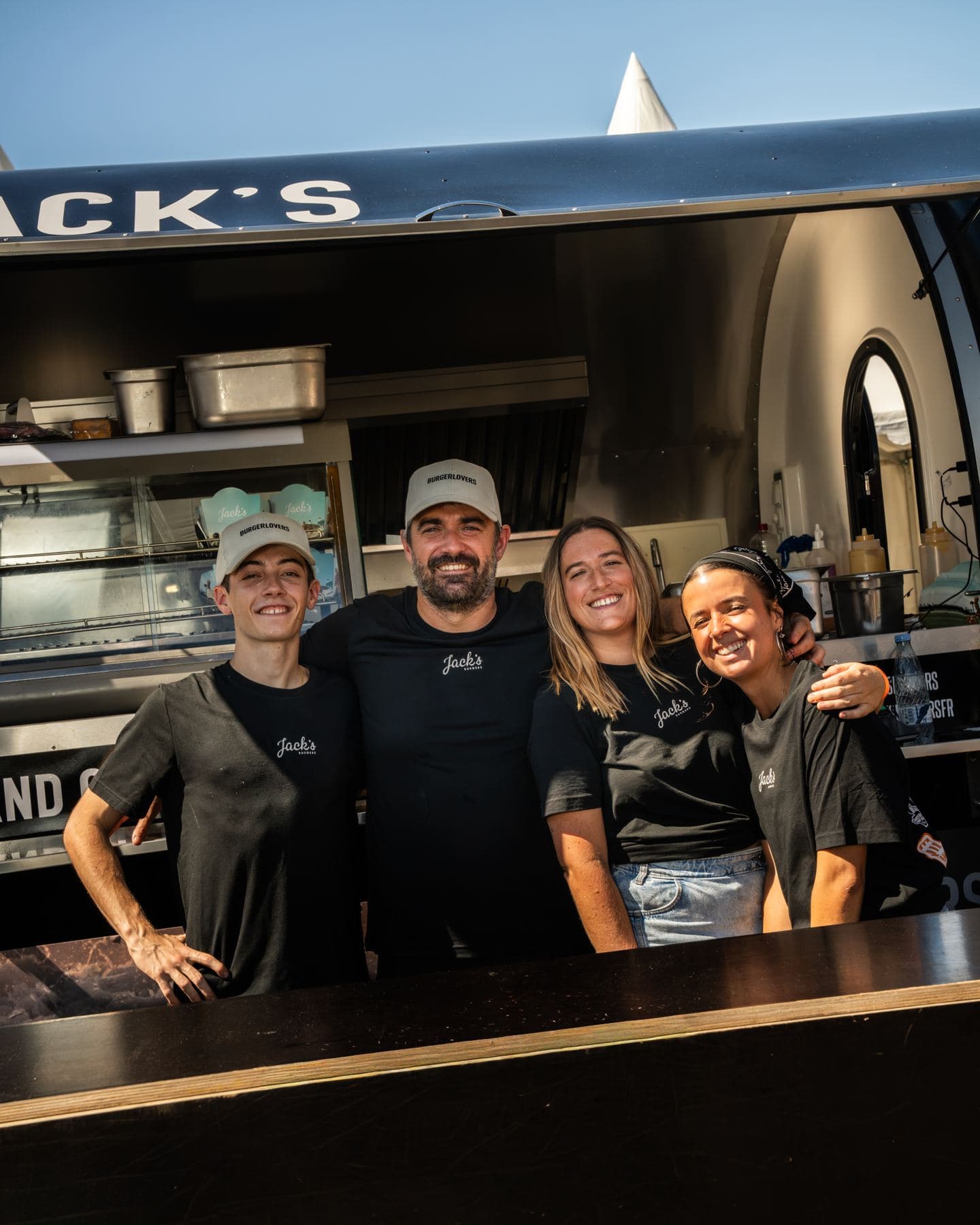
Ask before you plan the bar.
The Barista, ready for a beer tap.
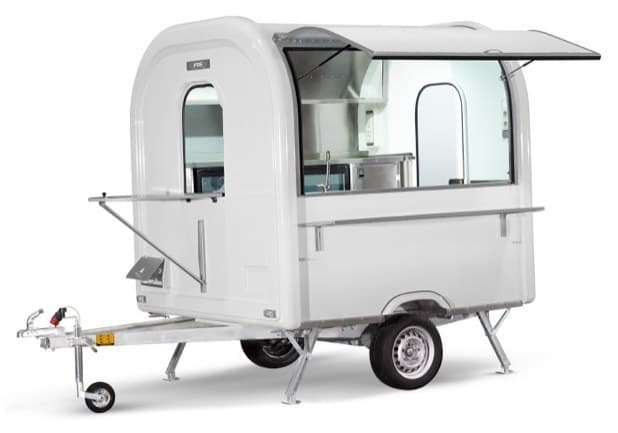
As for the trailer, our Barista is the bar layout: a serving counter, a three-door bottle fridge, a double sink, and room for the beer tap or coffee machine of your choice. Sort out the licence before your first event: the tap has to wait for the paperwork.
Not sure which layout suits your concept? The free Academy quiz works it out from your menu; for the other steps, read how to start a food truck business.
Licence in order, time to serve.
An alcohol licence comes on top of your trading permit and food business registration, never in place of them: read our guide to the food truck licence, and browse our food truck trailers, from €11,500 excl. VAT.
Licence in order, counter open.
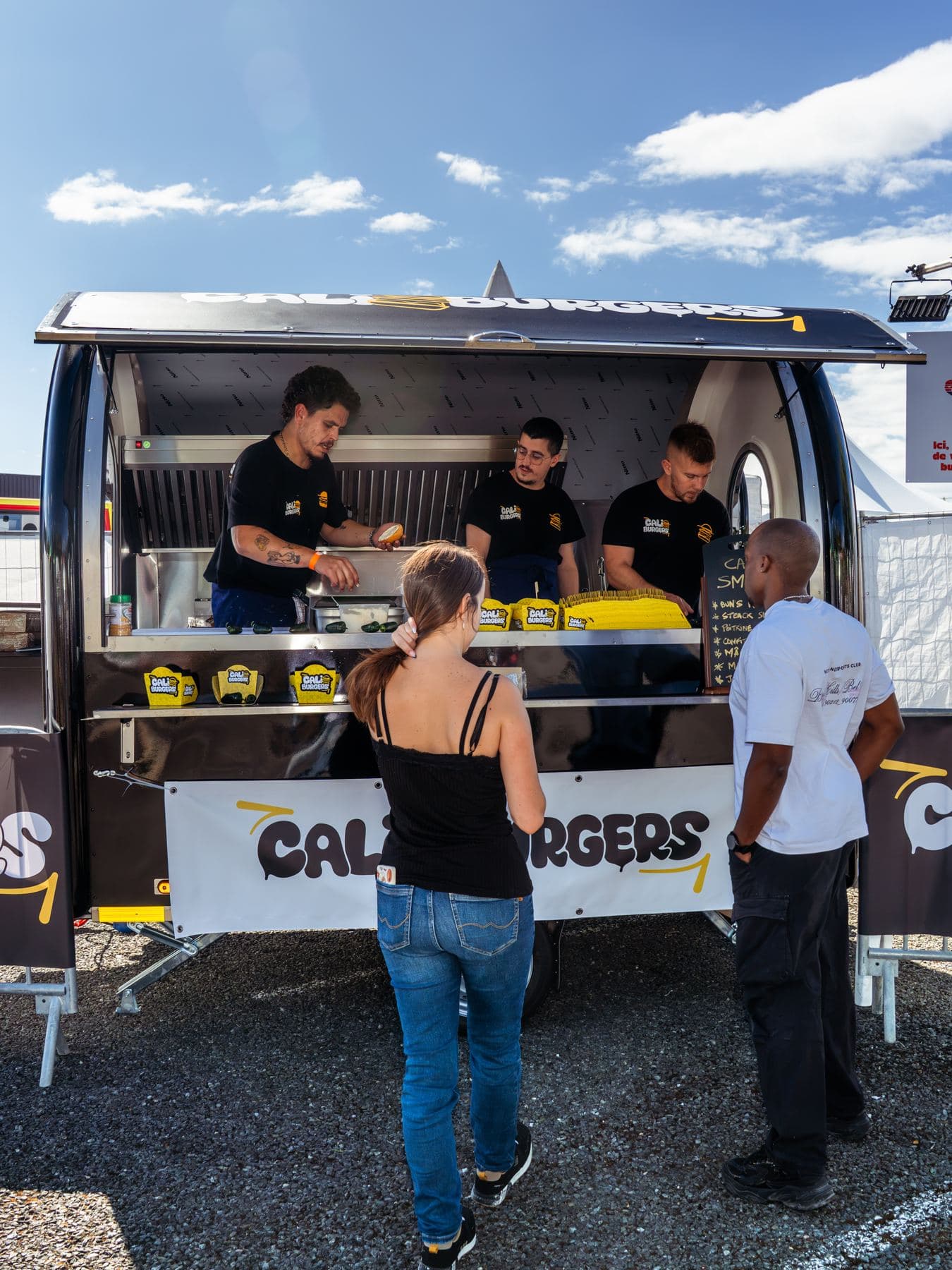
Your questions answered.
Got another question? Just ask us ›Not under a licence of its own: an occasional licence is only granted to someone who already holds an on-licence, such as a pub, for up to six consecutive days per application. At an event, alcohol is sold under that holder’s occasional licence.
No. Each country has its own alcohol licences, granted by a court, the police, the municipality or a national agency, usually for a place, an event or a period.
Not any more: since 1 June 2026, Swedish law no longer requires meals, a kitchen or seating for a licence. Applicants must still meet the other conditions, including passing a test on the law.
Yes, with the licence that covers the event: an occasional licence through an on-licence holder in Ireland, a police permit in Denmark, a temporary or single-occasion licence in Sweden, Norway or Finland. Ask the organiser which licence covers the site.
Not as a mobile street trader: the City of Copenhagen excludes alcohol, along with soft drinks and sparkling water, from what mobile street traders may sell.
Our Barista layout: a serving counter, three-door bottle fridge, double sink and room for the tap or coffee machine of your choice, from €13,300 excl. VAT in the AIR 220 format.
 By Romain, founder