How to start a food truck business in Europe
Pitches, business set-up, food registration, hygiene and the trailer: the steps in the right order, each with its official source.
 Romain BarreauFounder of Food Truck Store · 5 min read
Wondering how to start a food truck business in Europe? You need a pitch, a registered business, registration with your food safety authority and a trailer that is registered and ready to go. The EU sets common hygiene rules, and each country sets its own procedures. Here is the order to follow, with a source for each step.
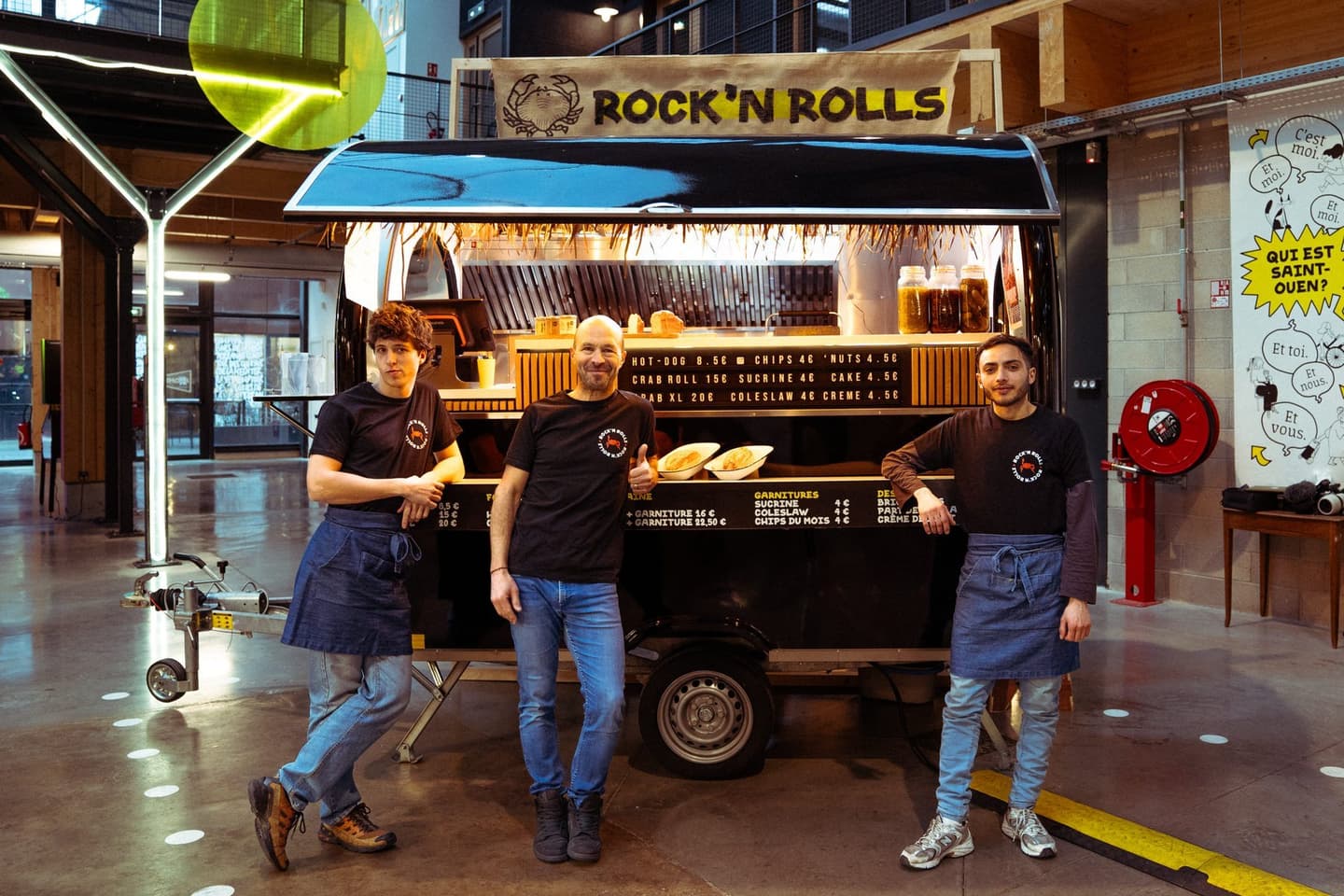
Find your pitch before your trailer.
Where you sell determines your menu, your opening hours and the trailer format you need. Secure your first pitches, such as weekly markets, business parks or events, before you spend any money.
Set up your business, then register.
Register your business in the way your country requires: in the Netherlands, with the Chamber of Commerce (KVK), which passes your details on to the tax authorities (Ondernemersplein); in Belgium, as self-employed, since the itinerant trader card was abolished in April 2024 (hub.brussels). Then register the food business and the trailer.
- Register your business
With your country’s business register, such as the KVK in the Netherlands.
- Register your food business
With your food safety authority, before you start trading.
- Get your trading permits
From the local council for public land, and from the organiser for markets and events.
- Register the trailer
With its European Certificate of Conformity, as your country requires.
What the hygiene rules require.
Every food business operator must notify the competent authority of each establishment so that it can be registered (Regulation (EC) 852/2004, art. 6). The operator must put in place procedures based on HACCP principles and make sure food handlers are supervised and instructed or trained in food hygiene (art. 5 and annex II, chapter XII). Mobile sales vehicles have their own chapter, covering hand washing, easy-to-clean surfaces, drinking water, waste and temperature control (annex II, chapter III).
- RegistrationWith your country’s food safety authority: the AFSCA in Belgium, the NVWA in the Netherlands, the HSE in Ireland.
- HACCP proceduresYour food safety plan and its records, such as fridge temperature logs.
- Hygiene trainingFood handlers must be supervised and instructed or trained in food hygiene, as EU rules require.
- Water and hand washingHot and/or cold drinking water, and facilities for washing and drying hands hygienically.

Get the trailer ready for the road.
With its European Certificate of Conformity, the trailer is registered in the way your country requires, and no EU country may refuse to register a trailer that conforms (Regulation (EU) 2018/858). The gas installation is carried out and inspected by a qualified professional in your country (Regulation (EU) 2016/426, art. 3(3)). Periodic roadworthiness tests vary by country: none up to 3,500 kg in the Netherlands (RDW), and a first main inspection after 36 months for a 750 kg trailer in Germany (StVZO, annex VIII).
- 1 yearwarranty, parts and labour, as set out in our terms of sale
- 36 monthsuntil the first test of a 750 kg trailer in Germany
- 2 yearsmaximum interval between gas inspections in Germany
Where you are allowed to sell.
To trade on public streets and squares, you need permission from the local council: a pitch permit (standplaatsvergunning) in the Netherlands, or the municipality’s authorisation in Belgium (hub.brussels). At markets and events, the organiser allocates the pitches; on private land, you need the landowner’s permission. In Brussels, hub.brussels describes the municipal authorisation as the biggest hurdle for food truck owners.
Your pitch shapes your service.
VAT and accounts from day one.
VAT rates on food and drinks, and any small business scheme, are set by your country: in the Netherlands, for example, the small business scheme (KOR) is open to businesses with a turnover of less than €20,000 per calendar year (Ondernemersplein). Ask your tax office or your accountant before your first sale.
Choose your layout before you crunch the numbers: the free FTS Academy quiz tells you which trailer, and which format, suits your menu.
Getting started, step by step.
Pitch, business, food registration, trailer, tax: take the steps in that order. Find your layout with the Academy quiz, read what a food truck costs and browse our food truck trailers.
Ready for the first service.
Your questions answered.
Got another question? Just ask us ›Secure your pitches first. Then register your business, register as a food business with your country’s food safety authority, put your HACCP procedures in place and register the trailer. The gas installation is carried out and inspected by a qualified professional in your country.
In the EU, your food business must be registered with the competent authority (Regulation (EC) 852/2004, art. 6), and some activities also need approval. On public land, you need permission from your local council as well.
EU rules require food handlers to be supervised and instructed or trained in food hygiene, and the people responsible for your HACCP procedures to be trained in HACCP principles. Your country may add its own training requirements.
For the AIR 220, a 750 kg trailer, a category B licence is enough. For the BOLD 270, a category B licence also covers the 1,000 kg version with most cars; for the 1,500 kg version, depending on your car, you need the B96 code or a BE licence (Directive 2006/126/EC).
At Food Truck Store, trailers start at €11,500 excl. VAT. Then there are appliances, fees and insurance: our guide to what a food truck costs in Europe covers every item.
 By Romain, founder