Food truck on private land: permission and limits
On private land, the owner’s permission is where the rules start, not where they end: food registration, licences, planning and the agreement to sign.
 Romain BarreauFounder of Food Truck Store · 6 min read
A company car park, the courtyard of a country house, the forecourt of a garden centre: a food truck on private land doesn’t need a pitch on public land. But the owner’s permission is where the rules start, not where they end. Here is what still applies in each country, and how to negotiate your spot.
Get the owner’s permission in writing.
On private land, the owner or the site manager has the final say: Copenhagen tells traders to contact the owner of any area that does not belong to the city (City of Copenhagen), Helsinki requires the owner’s consent on private and state land (City of Helsinki), and in Cascais the owner’s authorisation is part of the notification for your mobile catering business (Cascais). Put the agreement in writing, and settle in advance the points that tend to cause disputes later.
- Location and hoursThe exact spot, the area you use, the days, your opening hours and the times for setting up and packing away.
- The feeA fixed amount, a share of your takings or both: write down how it is calculated.
- Water, power, wasteWho supplies water and electricity, who pays for them and where the bins go.
- Insurance and noticeYour insurance certificate attached, how long the agreement runs and the notice period.

How to ask for a car park pitch.
Whether it is a supermarket, a garden centre, a business park or a head office, speak to the owner or the site manager, who is not always the brand on the sign. Bring a short pack: your concept, the days and hours you want, photos of the trailer at work and your insurance certificate. Offer a trial period before any long commitment, and agree from the start who pays for what.
In Ireland: licence, HSE and planning.
The casual trading licence covers selling at a place where the public have access as of right, or in a casual trading area set by the council, and you apply at least 30 days before you start (Casual Trading Act 1995, sections 2 and 4), so ask your council whether your site is covered. Kildare County Council tells traders on private land to check planning requirements with the planning authority (Kildare County Council). You must also notify the HSE before you start trading; once registered, you can trade anywhere in the country, as long as you keep your confirmation in the trailer (FSAI, Guidance Note 16, section 2.2).
- Notify the HSE
Before your first sale, with the office for the area where the trailer is normally kept.
- Ask your council
Whether casual trading rules apply to the site, and what the planning authority requires.
- Sign the agreement
With the owner, with your insurance certificate attached, and keep it in the trailer.

Elsewhere, the rules still follow you.
Being on private land does not exempt you from trading rules. In Oslo, selling food from a food truck requires a licence from the municipality, the serveringsbevilling (City of Oslo); in Stockholm, a food truck set up for the day needs no building permit, but one that stays longer does (City of Stockholm). In Italy, street trading rules also cover private areas the municipality has at its disposal and privately owned squares with a public right of way (Legislative Decree 114/1998, art. 27), and trading in airports, stations and on motorways needs the permission of their owner or operator (art. 28).
- NorwayThe municipal serveringsbevilling, on private land just as on public land.
- SwedenIn Stockholm, a building permit if the food truck stays beyond a single day.
- ItalyPrivate areas the municipality has at its disposal follow the rules for public areas.
- PortugalIn Cascais, the owner’s authorisation goes in with your notification.
Food hygiene does not change.
Every food business must register with the competent authority, wherever it trades (Regulation (EC) 852/2004, art. 6): the HSE in Ireland; in Sweden, the municipality where you mainly trade, at least two weeks before you start (verksamt.se); in Finland, the food control service of your home municipality, four weeks before (Finnish Food Authority). Handwashing, drinking water, waste and temperatures follow the same rules in a car park as on a market square.
Same hygiene rules, whoever owns the ground.
Long stays and the neighbours.
A trailer that stays in the same place for months, with a terrace or a shelter, can raise planning questions that a single day of trading does not. Noise, smells and customers’ cars also matter to the people who live nearby. Ask before you sign for a year, not after the first complaint.
Before you sign an agreement for a whole year, put two questions to your council in writing: does trading on this site need a licence, and does a trailer parked there for months need planning permission?
A good site needs a good agreement.
On private land, the owner’s permission gets you in, but the other rules still apply: food registration, a trading licence where your country requires one, insurance and good relations with the neighbours. And if a site does not live up to the agreement, a trailer can easily move on to the next one. Find your layout with the FTS Academy quiz, read how to start a food truck business and see our food truck trailers, from €11,500 excl. VAT.
If the site does not deliver, the trailer moves on.
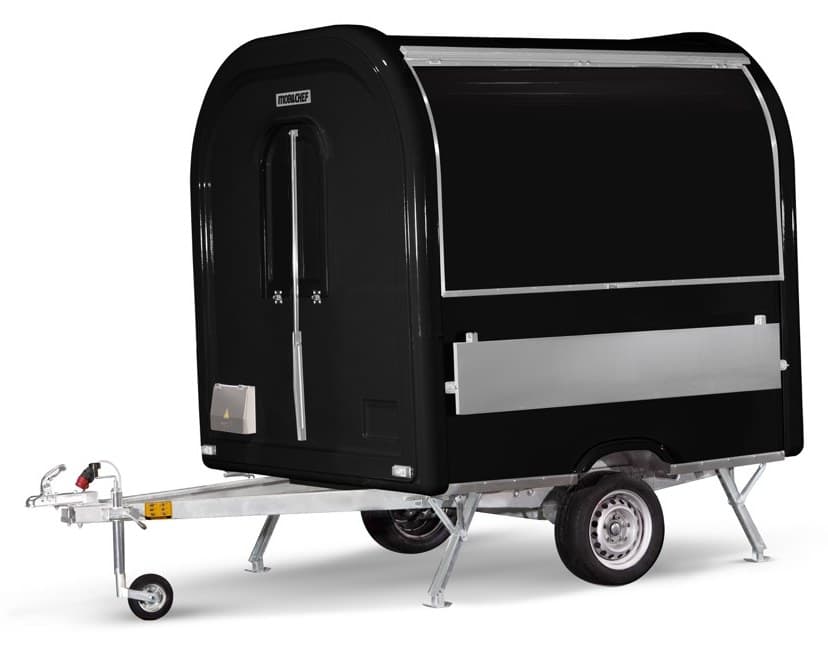
Your questions answered.
Got another question? Just ask us ›Yes, with the written permission of the owner or the site manager. Your food registration, the trading licence your country may require, your insurance and the planning rules still apply.
The licence covers places where the public have access as of right and the casual trading areas set by the council. Ask your council whether your site is covered; Kildare also tells traders on private land to consult the planning authority.
Yes. Every food business operator trading from a food stall must notify the local HSE environmental health office before starting. Once registered, you can trade anywhere in Ireland, as long as you keep your confirmation in the trailer.
Approach the owner or the site manager with a short pack: your concept, days and hours, photos of the trailer at work and your insurance certificate. Propose a written agreement with a fixed fee or a share of your takings, and a trial period.
Ask the planning authority first. In Stockholm, for example, a food truck set up for the day needs no building permit, but one that stays longer does; in Ireland, Kildare tells traders on private land to consult the planning authority.
 By Romain, founder