How much money do food trucks make? Margins and break-even
No made-up averages: how to estimate your own takings, then deduct VAT, ingredients and fixed costs, with the official source for each deduction.
 Romain BarreauFounder of Food Truck Store · 6 min read
How much money do food trucks make? There is no reliable average: your takings depend on your pitch, your menu, your prices, your trading days and how fast you serve. So we will not make up a figure. Instead, this guide shows you how to estimate your own takings and what is left after each deduction, with a source for every step.

Why there is no average.
Official statistics have long lumped food trucks in with restaurants: in Ireland, the CSO counted 8,372 enterprises under “restaurants and mobile food service activities” in 2020, with no split between the two (CSO). Norway now has a separate class for mobile food service, 56.120, whose description mentions food trucks by name (Statistics Norway, SN2025), and 355 entities were registered under it on 7 October 2026 (Brønnøysund Register Centre). We have found no average turnover per food truck in the official statistics of Ireland or of any other country we serve.
- 8,372restaurant and mobile food service enterprises in Ireland, 2020
- 355mobile food service entities registered in Norway, 7 October 2026
- 205of these are sole proprietorships
A simple formula for daily takings.
Your daily takings are the number of sales multiplied by your average spend per customer. Meal deals, drinks and desserts push the average spend up; the number of sales depends on footfall, but also on how quickly you serve. Multiply by the number of days you trade each month, and you have a monthly figure you can plan with.
- Sales per hour
Stand on your future pitch at the busiest hour and count the people walking past and the customers going into the businesses around you.
- Selling hours
Lunch, evenings, weekends: how many hours will you actually be selling?
- Average spend
What a customer spends on average, including a drink and dessert.
- Trading days
Per week and per year, allowing for the weather, the seasons and holidays.
First, take off the VAT.
The VAT included in your selling price is not your money, and the rate depends on your country and on what you sell. In Ireland, takeaway food is generally treated as a sale of goods: hot food and hot tea and coffee at 9% since 1 July 2026, cold food at 0%, and ice cream, soft drinks and alcohol at 23% (Revenue). Elsewhere, check the rates published by your own tax authority: Skattestyrelsen in Denmark, Skatteverket in Sweden, Skatteetaten in Norway, Vero in Finland, the VAT law in Spain and the Portal das Finanças in Portugal.
- Spain and PortugalSpain: 10% on food, 21% on alcohol and sugary soft drinks. Portugal: 13% on ready meals to take away, 23% on alcohol.
- Denmark and FinlandDenmark: a single rate of 25%. Finland: 13.5% on food and soft drinks, 25.5% on alcohol.
- Sweden and NorwaySweden: 6% on food from a food truck until the end of 2027. Norway: 15% for takeaway, 25% once customers can eat on site.

Then deduct ingredients and packaging.
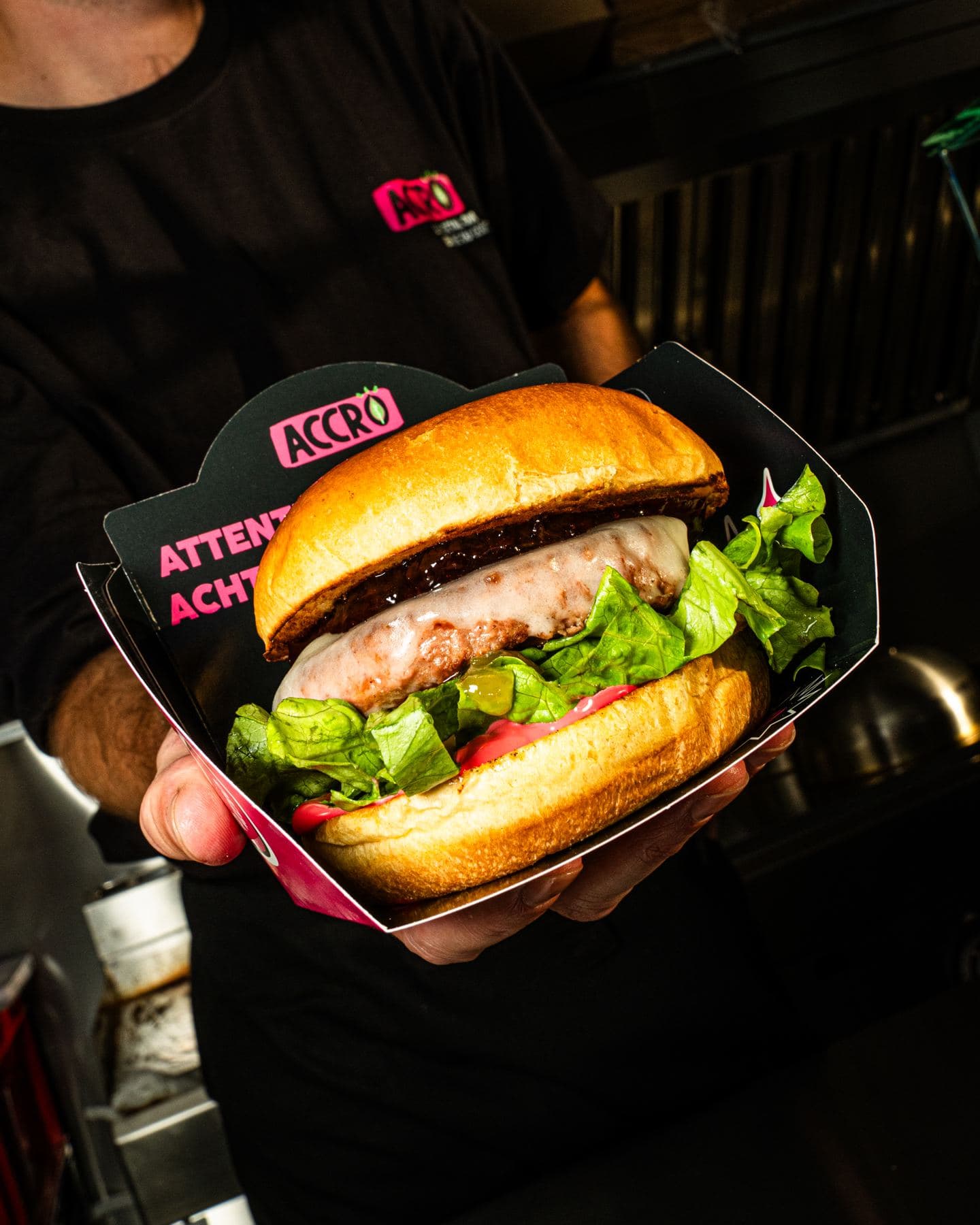
Ingredients and packaging are your biggest variable cost, so cost every dish at your own supplier prices, down to the bread, the sauce and the box. What is left after VAT and purchases is your gross margin, and it has to pay for everything else. Redo the sums whenever a supplier changes a price.
Cost every dish from its own ingredients.
Fixed costs and your break-even point.
Pitch fees, insurance, your accountant and the card terminal all have to be paid whether you sell or not: in Ireland, a casual trading licence for public land carries a fee set by each council, and Kildare asks every trader to hold public, product and employer’s liability insurance (Kildare County Council). Divide your fixed costs by your gross margin rate to find the monthly takings you need to stop losing money. The free business plan in the FTS Academy does the calculation with your own figures, and our guide to what a food truck costs lists every item.
Monthly break-even takings = monthly fixed costs ÷ gross margin rate. You only start paying yourself above that line, and that income still has to cover your tax and social insurance.
Keep records from day one.
Your accountant works out what you owe on your profit: in Ireland, a sole trader pays Class S PRSI at 4.35% of reckonable income, the rate since 1 October 2026 (Citizens Information), plus income tax at 20% and then 40%, and the universal social charge (Revenue, Budget 2026). After one season, your records show your real average spend, your real sales per hour and your quiet months. That is the basis for your next business plan and for your conversation with the bank.
Are food trucks profitable? Run the numbers.
A food truck is profitable when its pitch brings in enough sales at your prices to cover VAT, purchases and fixed costs. Go and see the pitch, count the people walking past and the competition, and work out your break-even point before you sign anything. Our food truck trailers start at €11,500 excl. VAT, and the Chef+, with its extractor hood, at €13,495.
In the end, what matters is what each service brings in.
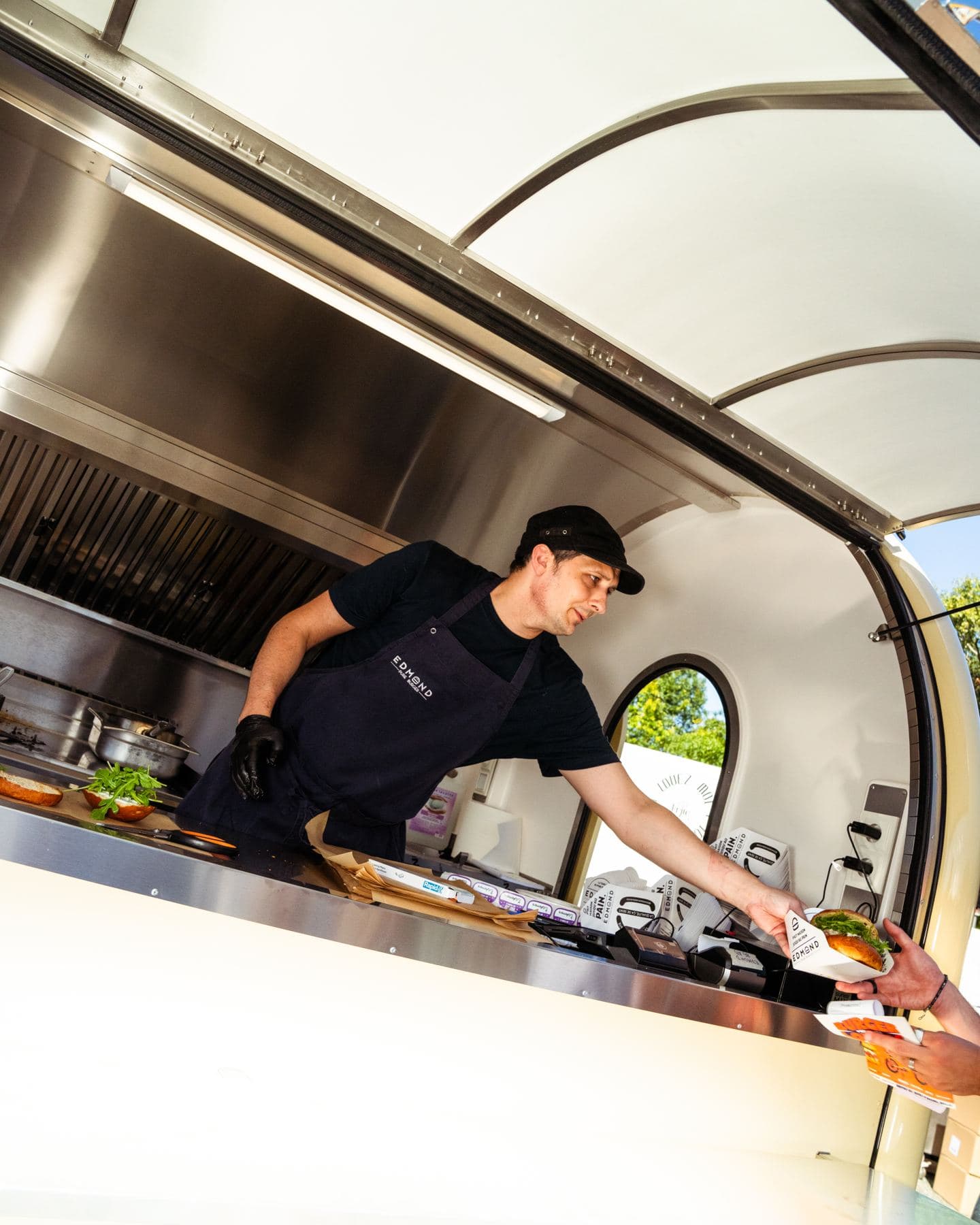
Your questions answered.
Got another question? Just ask us ›There is no reliable average: it depends on your pitch, your menu, your average spend and how fast you serve. Work it out yourself: sales per hour times selling hours times average spend for each trading day, then deduct VAT, purchases and fixed costs.
Yes, when the pitch brings in enough sales at your prices to pay for your purchases, your fixed costs and your own wage. Check this with your own figures before you buy, for example in the free business plan in the FTS Academy.
Your takings excluding VAT, minus ingredients and packaging. It depends on your menu and your suppliers, so cost every dish using your own purchase prices rather than an industry average.
Divide your monthly fixed costs by your gross margin rate. The result is the monthly takings, excluding VAT, you need to stop losing money; you only start paying yourself above that figure.
Takeaway food is generally treated as a sale of goods: 9% on hot takeaway food and hot tea and coffee since 1 July 2026, 0% on cold food, and 23% on ice cream, soft drinks and alcohol (Revenue).
Yes: your accountant and the tax authority will ask for them. Write down your takings after every service, keep every purchase invoice and use a separate business bank account from day one.
 By Romain, founder