Food truck power: generator, fridge and hook-up
Which fridge, how much power and when you need a generator: how to size your supply, the two inlets on our trailers, gas for cooking and the rules in each country.
 Romain BarreauFounder of Food Truck Store · 5 min read
Get power and refrigeration right and the day runs smoothly; get them wrong and you spend it watching the thermometer. A fridge that cuts out in the afternoon, an electric griddle that trips the pitch supply, a food truck generator drowning out your customers: all of this comes down to the trailer and the appliances you choose. Here is how to size your supply, using only figures we can source.
How cold your fridges must be.
EU hygiene rules call for equipment that keeps food at the right temperature and lets you monitor it (Regulation (EC) 852/2004, annex II, chapter III), but the actual figures are set by each country. In Ireland, food at risk of rapid microbial growth must be kept at 5 °C or below, and if you sell frozen food you need a freezer that can reach -18 °C (FSAI guidance note 16, section 4.3.9); in Norway, perishable chilled food must stay below 4 °C and hot dishes above 60 °C (Mattilsynet).
- 0 to +5 °Cthe Chef+ double-door fridge, within reach ›
- 321 Waverage power use of that fridge in the AIR 220
- 300 Wthe Barista three-door bottle fridge ›
- 123 Wthe Frost 7-tub ice cream display ›
Two fridges, two separate jobs.
The Chef+ has its fridge at the cooking station, while the Essentiel and the Frost have two spaces where you fit the refrigeration your menu needs. Plan for both from the start.
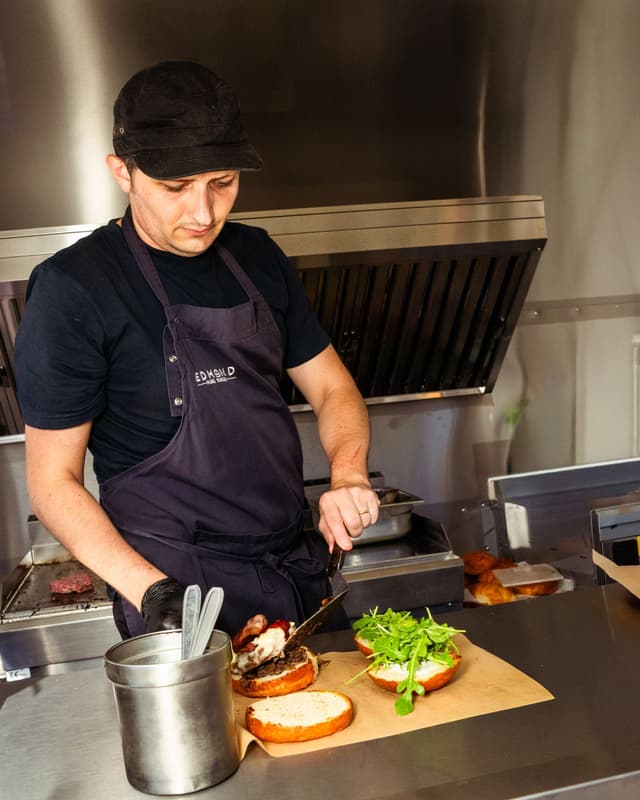
- The working fridgeWithin reach, for what you use at every order. Its top doubles as a worktop.
- Cold storageAn upright or under-counter fridge for restocking and drinks.
- Back-up for busy daysAn extra fridge plugged in inside the trailer, with its own thermometer, rather than a cool box.

Work out how much power you need.
Add up everything that runs at the same time at your busiest moment, then compare the total with what your pitches can actually supply. Each appliance’s power is on its data plate, and the average use of the built-in equipment is on each model page, under “Electrics and power use”.
- List the appliances
Refrigeration, lighting, water pump, till and card terminal; a fridge briefly draws more when its compressor starts.
- Count the cooking separately
An electric griddle or fryer often draws more than everything else put together: check its data plate.
- Compare with the pitch
Ask the organiser or the market manager what supply is available and how it is protected.
- Ask if it is shared
If you share a supply with other traders, you won’t get its full capacity.
230 V, two inlets, two circuits.
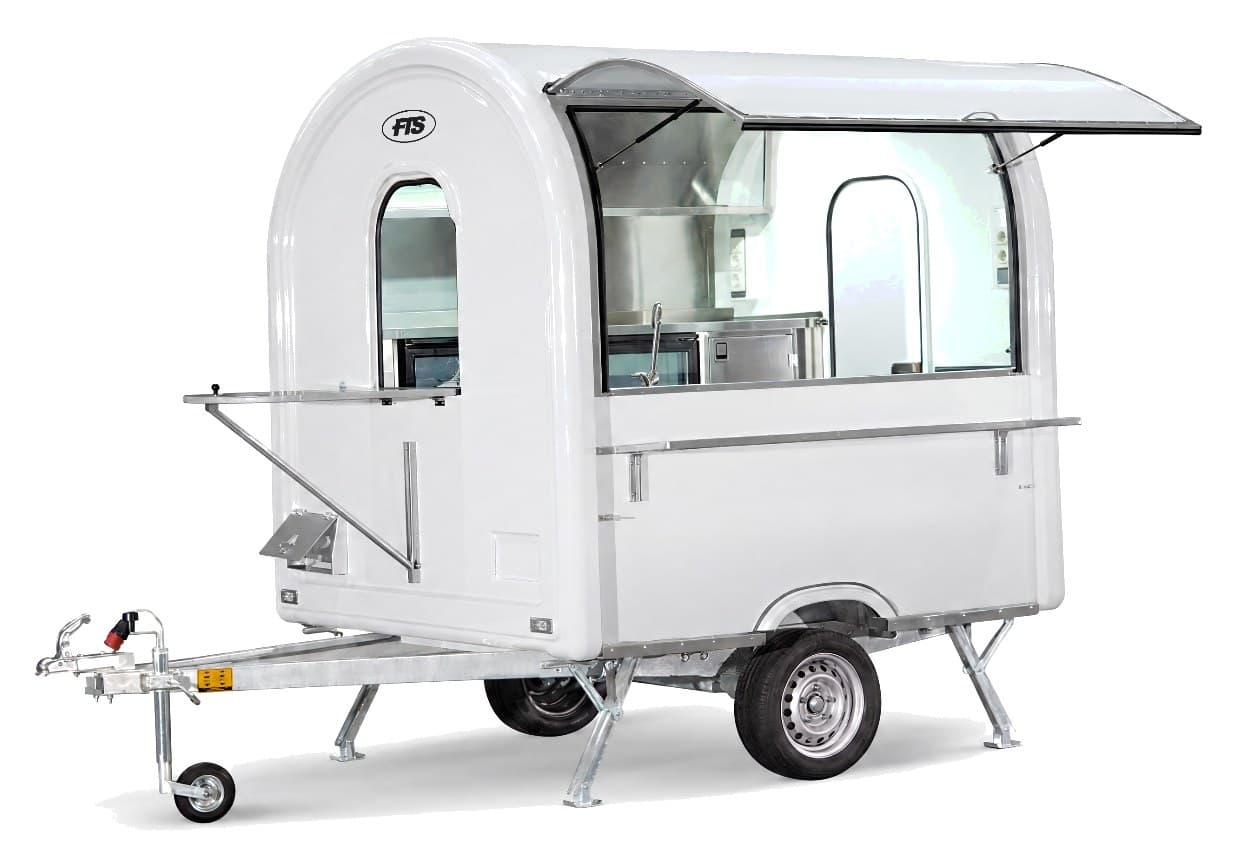
Every Food Truck Store trailer runs on 230 V, with two inlets feeding two separate circuits, one per inlet: plug in both, or only half the trailer will work. The model pages of our food truck trailers give the rating of each inlet and the maximum total your appliances may draw, and for Ireland we fit Irish standard sockets (type G) on request.
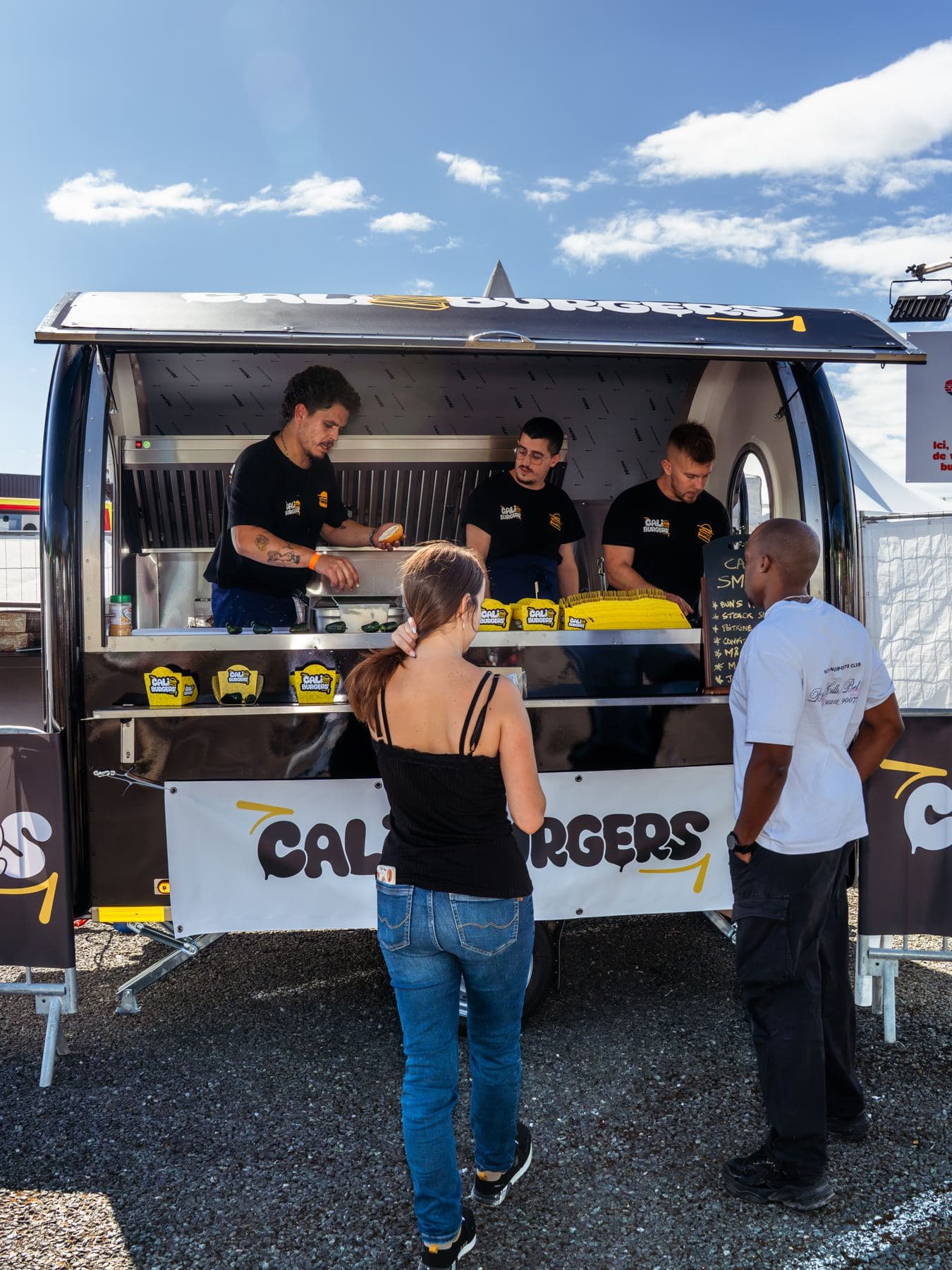
On the pitch: sort out the hook-up first, then set up.
Gas or electric: the real choice.
For a hot menu with a griddle, fryer or wok, we usually recommend gas: your electricity then only runs the refrigeration, lighting and till, and you still plug in both inlets. The gas bottle box is an option on every model, with the gas installation fitted and inspected by a qualified professional in your country; for what goes above the cooking top, see our guide to the food truck extractor hood.
Gas or electric for your menu? The free FTS Academy quiz tells you which layout and which format suit it, and why.
Choosing the right generator.
You need a generator on pitches with no hook-up, and it has to suit the place: in Ireland, the FSAI expects a power source of suitable capacity, sited so that it cannot contaminate food (FSAI guidance note 16, section 4.3.2). In Helsinki, most sales spots have no electrical connection, but generators are banned wherever there is a distribution point (City of Helsinki). Each model page gives the minimum generator for that trailer, connected to both inlets.
- Ask first
Check with the organiser that a generator is allowed, and where it can go.
- Leave a margin
Choose one rated above your calculated need, so that it copes when the compressors kick in.
- Quiet and stable
A quiet inverter generator is more readily accepted and gives a stable supply for electronics and refrigeration.
- Outside, well away
Away from the trailer and never in an enclosed space, so the exhaust fumes stay outside.
The first question we ask.
Wired right from the start.
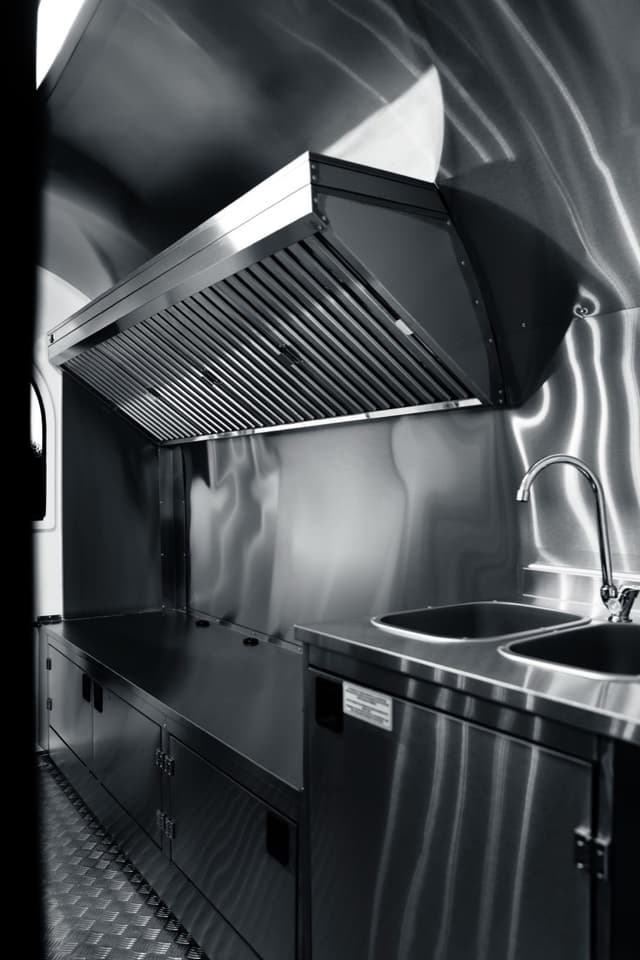
The one thing you cannot easily change later is the wiring: an electrical panel with circuit breakers and residual current protection, two inlets outside, and sockets above the worktops exactly where you plug things in, planned around where the refrigeration and the cooking go. That is how our trailers are delivered; a battery, an inverter and a solar panel can then help with lighting, the till and an energy-efficient fridge, but never with cooking.
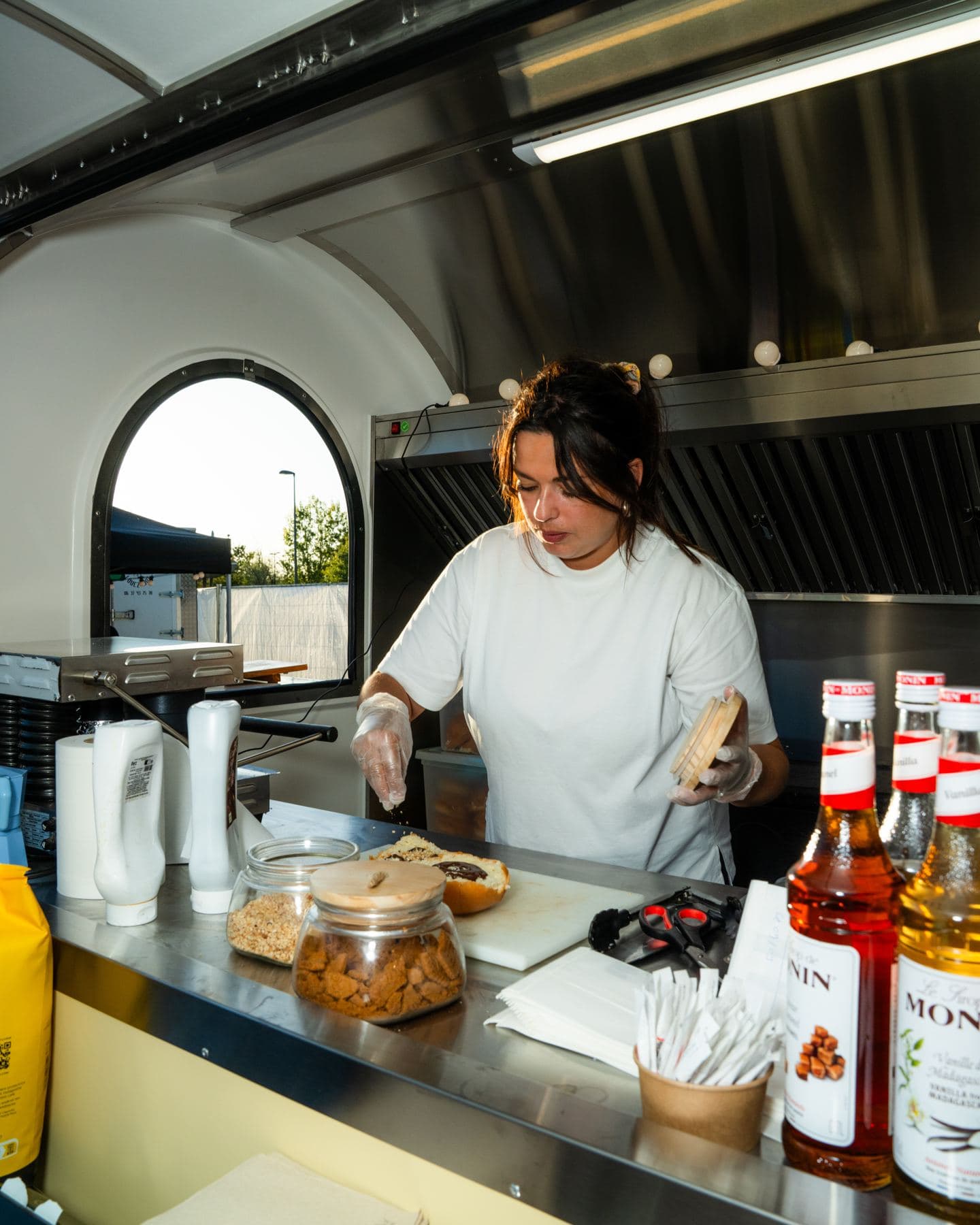
Lighting, refrigeration and sockets, right where you work.
Your questions answered.
Got another question? Just ask us ›Two kinds: a working fridge at your station for what you need at every order, and cold storage for restocking and drinks. The Chef+ has a double-door fridge within reach (0 to +5 °C); with the Essentiel, you fit your own fridges in the two spaces provided.
Add up everything that runs at the same time during the rush: refrigeration, lighting, pump, till and, above all, electric cooking. Our trailers run on 230 V with two inlets and two separate circuits: plug in both. If you cook on gas, your power needs stay small.
Only for pitches with no hook-up. Choose one rated comfortably above your needs, ideally a quiet model, place it outside and connect it to both inlets. Check first that the organiser allows it: Helsinki, for example, bans generators wherever there is a distribution point.
For lighting, the till and an energy-efficient fridge, yes, for a few hours, with a battery, an inverter and a solar panel. Not for cooking: for that, gas with a back-up generator is still the most reliable combination.
Yes: for Ireland, we fit Irish standard sockets (type G) on request. The trailer itself runs on 230 V, with two inlets that both need plugging in.
 By Romain, founder