Food truck equipment: the complete list
What hygiene rules require, what the trailer already comes with and what you add for your menu: the complete list, in three levels.
 Romain BarreauFounder of Food Truck Store · 6 min read
Food truck equipment means more than a griddle and a fryer, and those actually come last. First comes what hygiene rules require inside the trailer, then what the trailer already comes with. Here is the complete list, in three levels, so you buy only what your menu needs and never pay for the same thing twice.
Level 1: what hygiene requires.
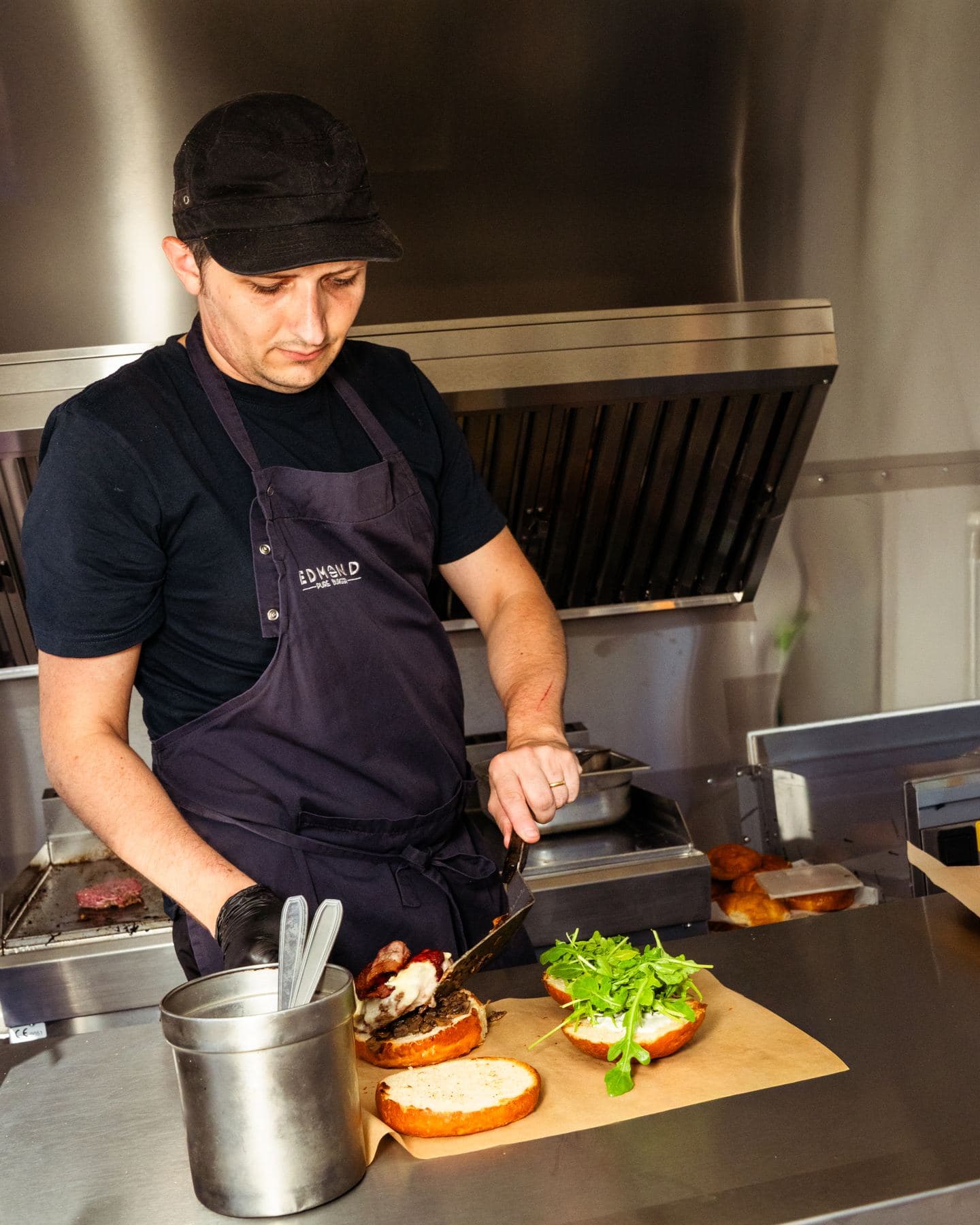
EU hygiene rules list what movable premises such as mobile sales vehicles must have, where necessary: facilities for washing and drying hands hygienically, smooth, washable surfaces, enough drinking water, hygienic storage and disposal of waste, and equipment to keep food at the right temperature and monitor it (Regulation (EC) 852/2004, annex II, chapter III). In Ireland, food that supports rapid microbial growth is kept at 5 °C or below and checked with a probe thermometer (FSAI guidance note 16, section 4.3.9).
Surfaces that wipe clean: where hygiene starts.
Hand washing, country by country.
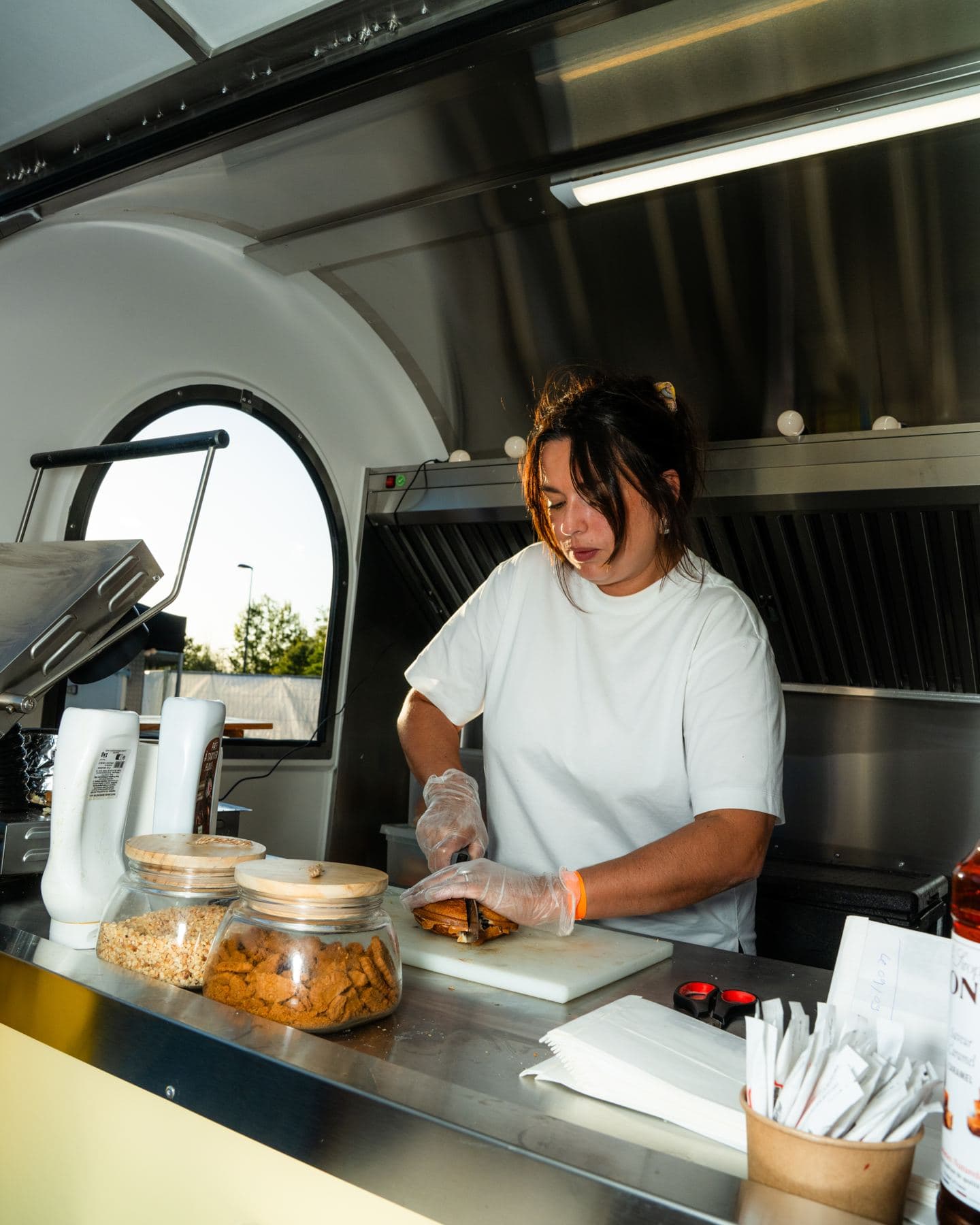
The EU rule says “where necessary”, and each country fills in the detail: below is what the food authorities in Ireland, Finland, Norway and Denmark ask for. A hand basin with hot water is available as an option on every Food Truck Store model.
- IrelandA wash-hand basin with running hot and cold, or warm, water where high-risk food is exposed; a container of at least 20 litres is recommended.
- FinlandRunning hot and cold water, or water premixed to the right temperature, when you handle perishable, unpackaged food.
- NorwayYou must be able to wash and dry your hands in the trailer: a hand basin connected to a water tank is a good solution.
- DenmarkAlways have enough water for washing hands: 50 litres a day for hand washing alone is not unusual.

Level 2: what every trailer includes.
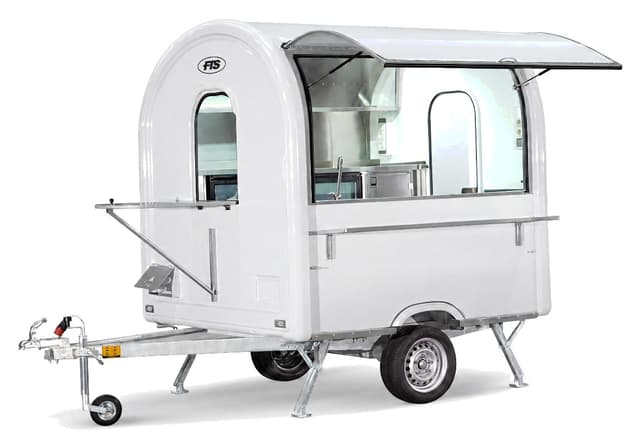
An empty trailer has none of this, which is what the choice between an empty and a fitted trailer comes down to. All of ours start from the same base: a fibreglass shell, a non-slip floor, stainless steel worktops, an automatic sink so you never touch the tap, 230 V wiring with two inlets and two circuits, and an optional gas bottle box. Each layout then fits out the inside for a particular kind of menu; here are their prices in the AIR 220 format, excluding VAT.
Level 3: what you add yourself.
Cooking appliances do not come with the trailer: you choose the griddle, fryer, grill, crepe maker, waffle iron, coffee machine or beer tap to suit your menu and whether you cook on gas or electricity. With the Essentiel and the Frost, you also supply the cold storage: two spaces are ready for your fridges or freezers.
- Cooking appliances
A griddle, grill, fryer or crepe maker, gas or electric, chosen to keep up with your service.
- Cold storage
Your own fridges or freezers in the spaces provided, sized for your menu.
- Utensils and small kit
Containers, utensils, chopping boards, packaging and thermometers: list them dish by dish.
- Everyday hygiene
Soap, disposable towels, cleaning products, and a lidded bin with bags.
- Selling and comfort
A till, a card terminal, a menu board people can read from a distance and an awning to shelter the queue.

Second-hand equipment: check it first.
A second-hand griddle or fridge can do the job, on one condition: everything that comes into contact with food must be effectively cleaned and, where necessary, disinfected, and installed so the area around it can be cleaned too (Regulation (EC) 852/2004, annex II, chapter V). Before you hand over any money, check four things.
- The rating plateVoltage, power and gas type must match your trailer and the pitches you trade on.
- The surfacesStainless steel with no corrosion, clean seals and no corners you cannot reach.
- Does it stay cold?Run the fridge and check the thermometer before you buy, and listen to the compressor.
- Gas: call a professionalA used gas appliance must be checked and connected by a qualified professional in your country.
Buy less, at the right time.
Before you buy an appliance, compare how much power it draws with what your pitches can supply: a powerful electric griddle can trip a shared supply. Decide between gas and electric appliance by appliance, and put a hood above anything that grills or fries: see our guides on power and refrigeration and on the extractor hood.
The right kit shows at the counter.
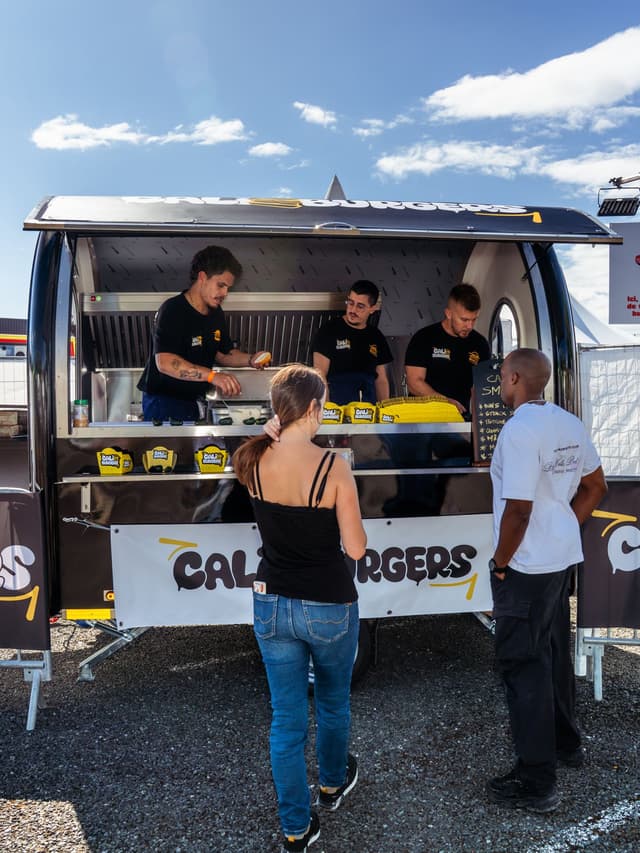
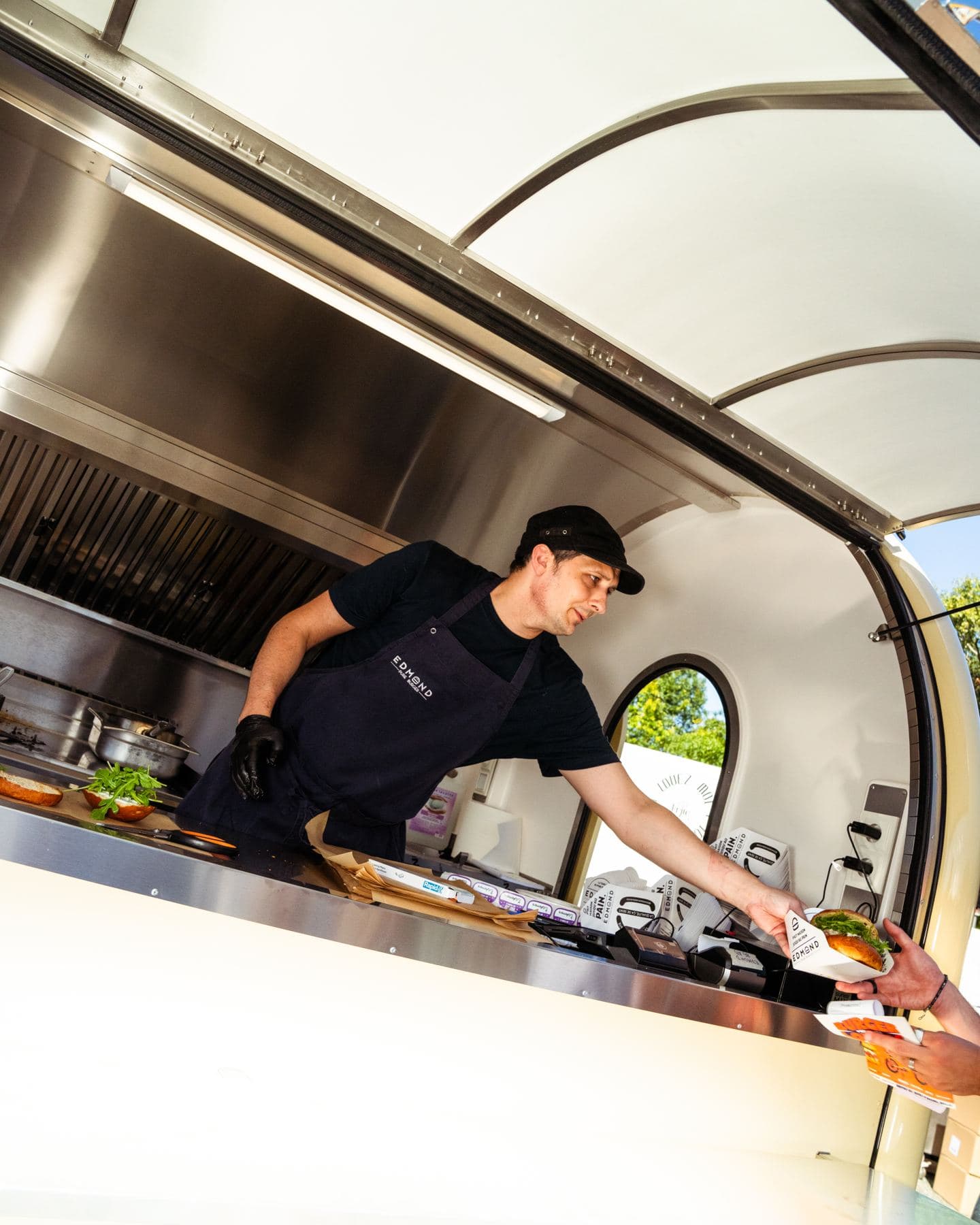
Customers never notice a well-equipped kitchen: they see a clean counter and food that arrives quickly. Start from your menu, find the layout that fits it with the free FTS Academy quiz, then see our food truck trailers.
What customers see: a clean counter and quick service.
Your questions answered.
Got another question? Just ask us ›Think in three levels: what hygiene rules require (hand washing, drinking water, temperature-controlled cold storage, washable surfaces, waste), what the trailer includes depending on its layout, and what you add for your menu: appliances, utensils and, with the Essentiel or the Frost, your own fridges or freezers.
A griddle or grill under a hood, often a fryer, cold storage within reach for meat and toppings, and something to toast the buns. The Chef+ is made for exactly that, with its hood, lowered cooking top and fridge close at hand; you choose the appliances.
No. Our trailers come without cooking appliances, so you can choose your own for your menu, gas or electric. The Chef+ has a lowered cooking top ready for them, under its hood.
Yes, as long as each appliance is easy to clean, matches your voltage and gas type, and you see it working before you buy. Have any gas appliance checked and connected by a qualified professional in your country.
It depends on what you handle and where you trade: Ireland asks for hot and cold, or warm, running water where high-risk food is exposed, and Finland asks for hot and cold or premixed water when you handle perishable, unpackaged food. Our trailers have an automatic sink, and a hand basin with hot water is an option on every model.
It is not part of the kitchen, but it makes a real difference: it shelters the queue and the till from sun and rain. On public land or at an event, mention it in your application, as it makes your pitch bigger.
 By Romain, founder