Food truck van or trailer: which to choose in 2026?
Van or trailer? Licence, registration, roadworthiness tests, upkeep, mobility and pitches: an honest comparison, point by point, with the rules in each country.
 Romain BarreauFounder of Food Truck Store · 5 min read
Van food truck or trailer: that is the first question for anyone starting a mobile food business. A van puts the kitchen and the engine in one vehicle, while a trailer is just the kitchen, towed by your car. We sell trailers, that is no secret, but some businesses genuinely need a van, so here is an honest comparison, point by point.

The price gap starts at purchase.
With a trailer, there is no engine to pay for: you only buy the working space, from €11,500 excl. VAT for the Essentiel in AIR 220 format. A van adds an engine, and some countries tax motor vehicles at registration but not trailers: Norway’s one-off registration tax applies to motor vehicles (Storting decision for 2026), and Spain’s registration tax does not apply to trailers (DGT). The only extra cost with a trailer is a car that can tow it, if yours cannot.
The licence: category B goes a long way.
Category B covers a vehicle with a maximum authorised mass of up to 3,500 kg, so a van loaded with its kitchen, water and stock must stay within that limit; above it, you need a heavier licence category (Directive 2006/126/EC, art. 4(4)). With a trailer, category B covers 750 kg, or a heavier trailer as long as car and trailer together come to no more than 3,500 kg; up to 4,250 kg you need code 96, obtained through training, a test or both depending on the country, and beyond that a BE licence. In Ireland, you get a BE licence with a learner permit and a driving test (NDLS).
- Van up to 3,500 kgCategory B. Loaded with its kitchen, water and stock, it must stay within its maximum authorised mass.
- Van above 3,500 kgA heavier licence category, so one more test to pass.
- Trailer of 750 kgCategory B, if your car is allowed to tow it. That is the weight of our AIR 220.
- Heavier trailerCategory B up to 3,500 kg combined, code 96 up to 4,250 kg, a BE licence beyond that. This is our BOLD 270.

Registration and tests, country by country.
In Ireland, a light trailer up to 3,500 kg is not registered, taxed or tested: only heavier trailers need a roadworthiness test (RSA). Elsewhere, trailers may have to be registered and tested too: in Sweden, every light trailer has its first test within 48 months, then one every 24 months (Transportstyrelsen). A van is a motor vehicle, registered and tested under your country’s rules.
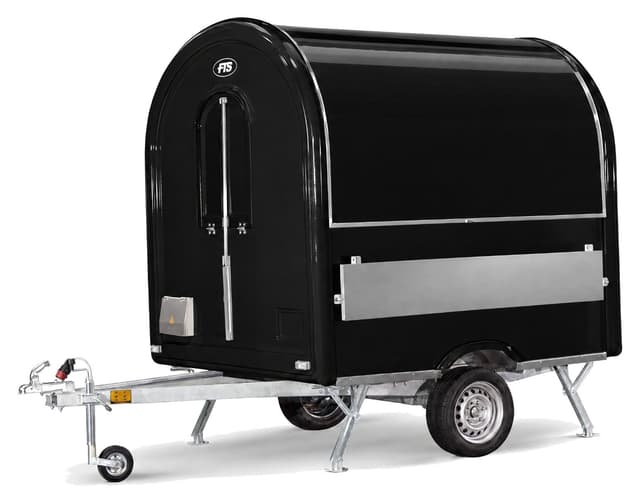
No engine, no gearbox: an axle, a drawbar and props.
Maintenance: the engine makes the difference.
A van is a vehicle first and foremost: engine, gearbox, clutch, brakes and battery all wear out, and when it goes to the garage, the kitchen goes with it. A trailer has no engine, so you keep an eye on the tyres, bearings, lights and coupling, plus the brakes on braked models. If the car breaks down, any other car that can tow takes over, and the kitchen stays open.
- Tyres
Tread, pressure and age, checked before each season.
- Bearings and axle
No play in the wheels, nothing rubbing.
- Lights and coupling
Every light working, the coupling and its socket in good order.
- Brakes
Checked regularly on the braked BOLD 270.
Mobility: where the van wins.
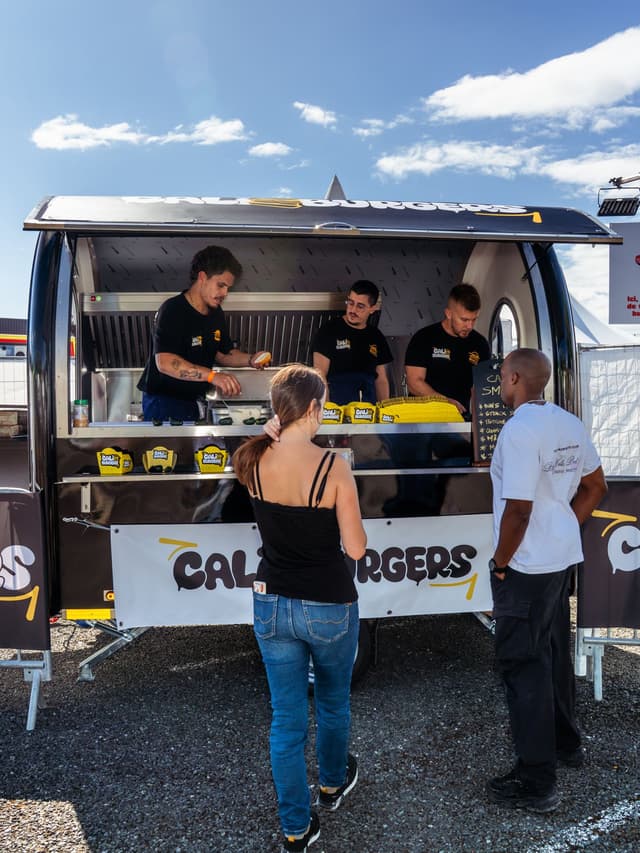
To be honest, the van wins on this one. You get in, start up and go, with no hitching and no reversing a trailer, so if you change pitch several times a day, you save time on every trip. Some cities also reserve their food truck spaces for motor vehicles: Stockholm’s food truck parking permit requires a vehicle registered as a car, lorry or bus, and Malmö’s bookable spaces exclude trailers (City of Stockholm, City of Malmö).
Where the trailer comes out ahead.
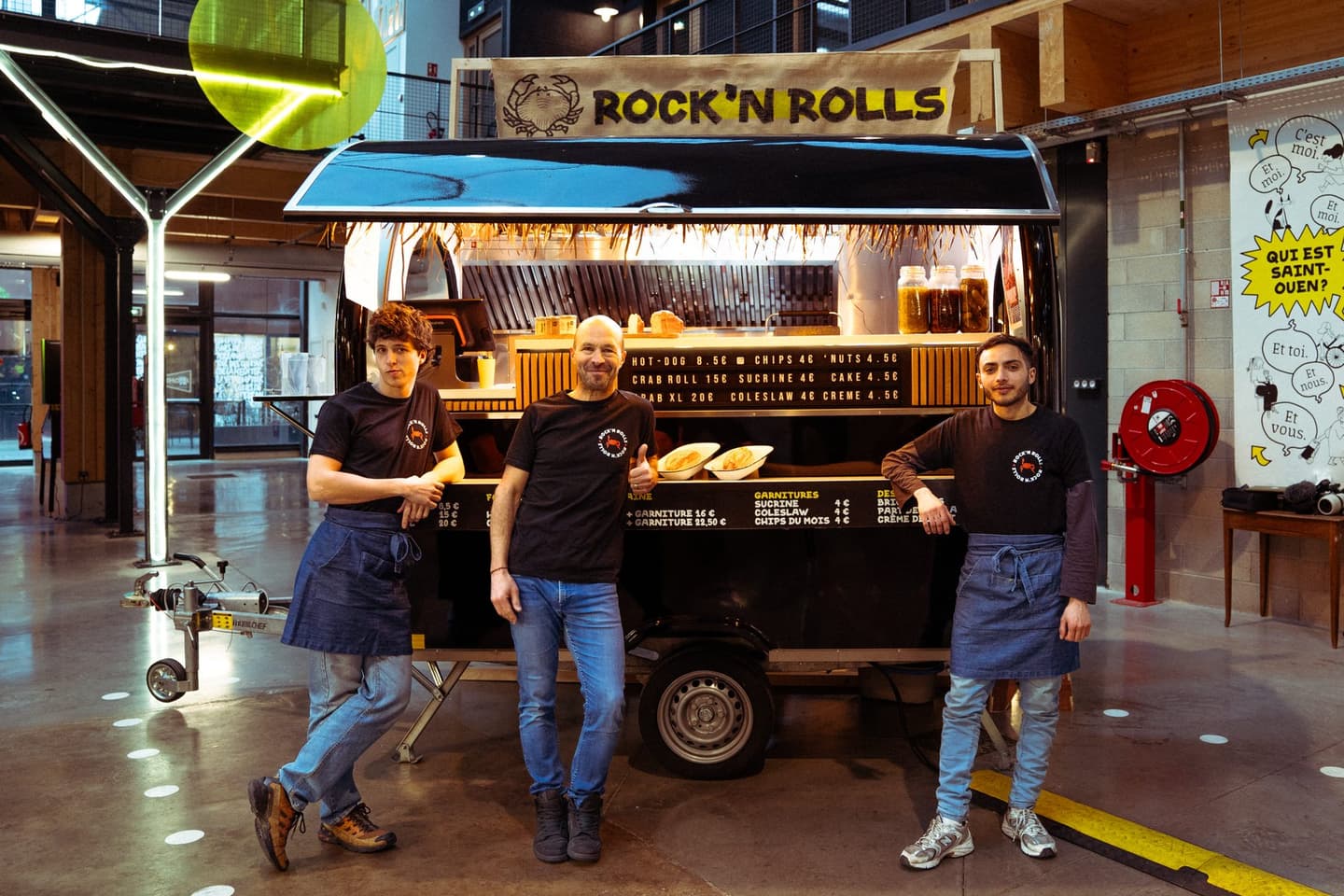
Once you are set up, the trailer pulls ahead again: unhitched, it leaves your car free for the shopping or a trip to the bank. Gothenburg gives food trucks and towed ‘pop up’ trailers the same street food spaces (City of Gothenburg), while in Copenhagen a trailer with a number plate uses parking spaces just like a van, with your car parked elsewhere (City of Copenhagen). Before you choose, ask the municipality or the organiser what kind of space and what length they accept.
Can your car tow a trailer? The car step of the FTS Academy reads the weights on your registration certificate and tells you which format you can tow, and on which licence.
Our verdict, case by case.
Choose a van if you change pitch several times a day, or if you have no car that can tow. In every other case, a trailer costs less to buy and to maintain, can be towed on a category B licence at 750 kg, and is valued on its kitchen when you come to sell it: compare our food truck trailers, or read our guide to the mini food truck.
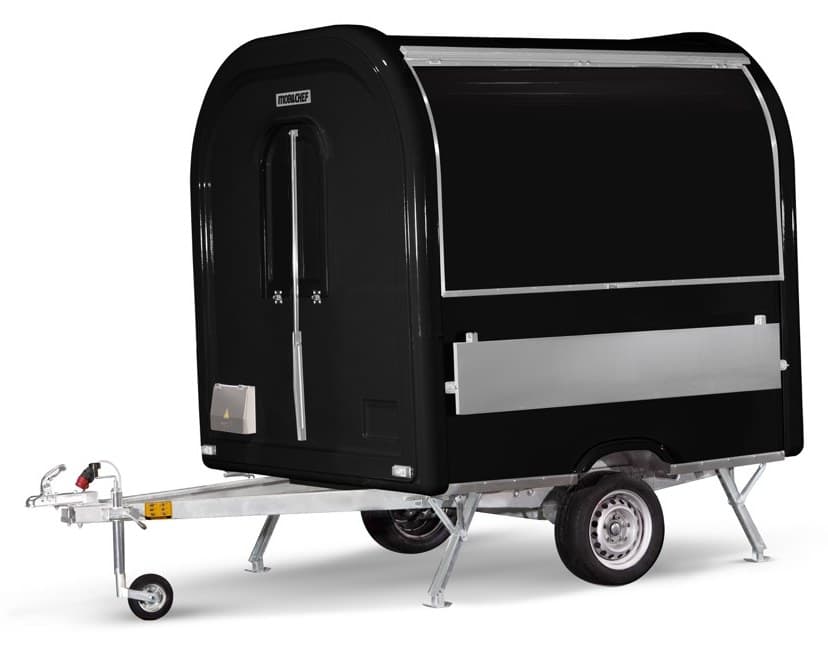
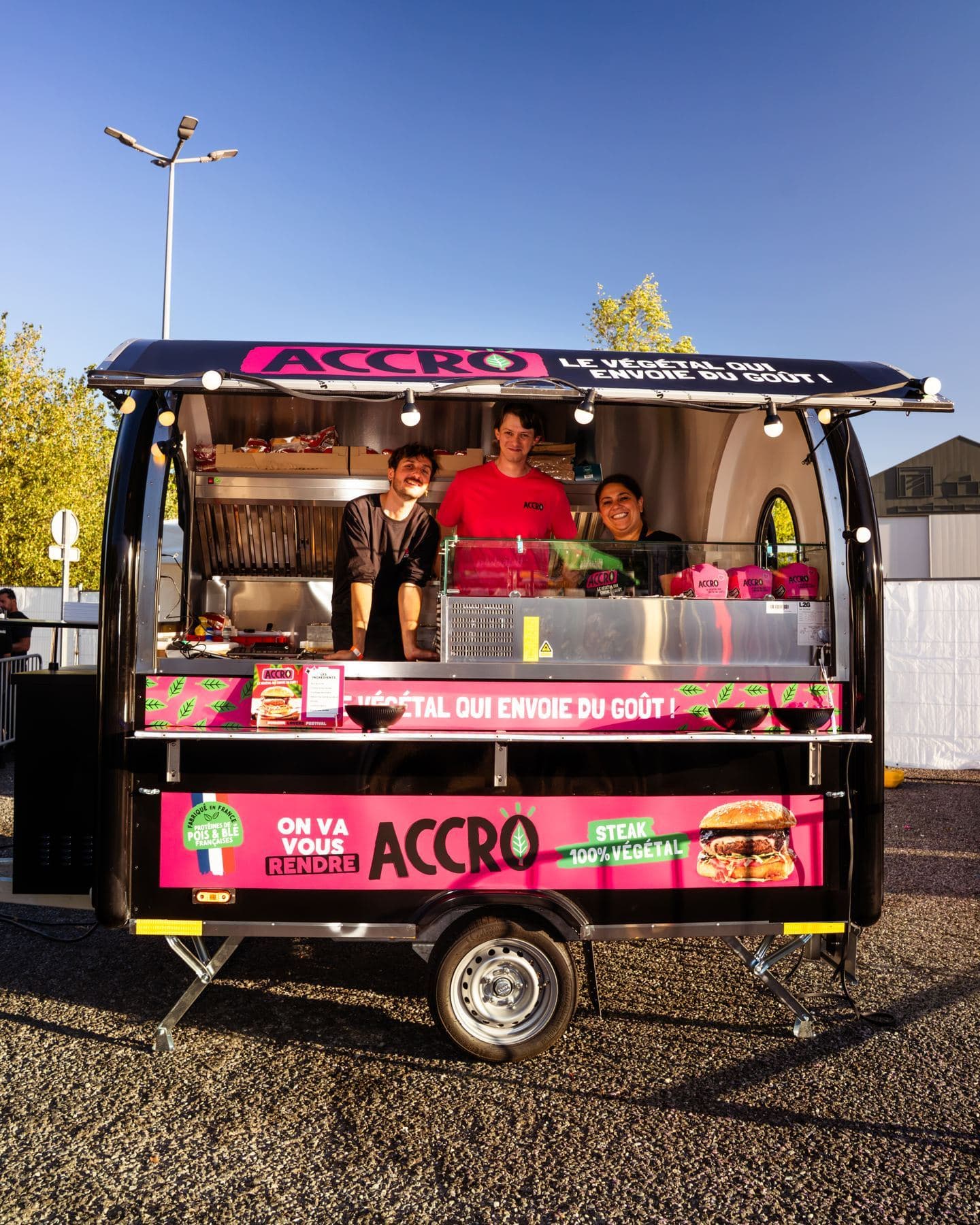
Unhitched, propped up, ready to serve.
Your questions answered.
Got another question? Just ask us ›Category B, if the maximum authorised mass on its papers is no more than 3,500 kg, and the loaded van must stay within it. Above 3,500 kg, you need a heavier licence category.
Not for a 750 kg trailer: category B is enough, as long as your car is allowed to tow it. For a heavier trailer, category B covers car and trailer up to 3,500 kg combined; up to 4,250 kg you need code 96, and beyond that a BE licence.
It depends on your country: not in Ireland up to 3,500 kg; in Sweden, every light trailer is tested within 48 months, then every 24 months. Either way, check the tyres, brakes, lights and coupling regularly.
Not always: Stockholm’s food truck parking permit and Malmö’s bookable spaces are for motor vehicles, while Gothenburg also accepts towed trailers. Ask the municipality before you choose.
It depends above all on its mechanical condition and its papers. Have the engine and the chassis inspected, and check that the papers match the conversion before you pay.
 By Romain, founder