Food trailer registration: COC, plates and tests
What the European Certificate of Conformity does, and how a food trailer is registered and tested in Ireland, the Nordic countries and southern Europe.
 Romain BarreauFounder of Food Truck Store · 5 min read
Food trailer registration varies by country: some register every trailer, others none up to a certain weight. What stays the same is the European Certificate of Conformity (COC) that comes with every Food Truck Store trailer: with it, no EU country may refuse to register a conforming trailer. Here is what the COC does, and what Ireland, the Nordic countries and southern Europe require, each with its official source.
What the European COC does.
A vehicle subject to EU type-approval can only be sold, registered or put into service with a valid certificate of conformity, and no member state may prohibit, restrict or impede the registration of a conforming vehicle (Regulation (EU) 2018/858, art. 48(1) and 6(5)). The same regulation groups trailers into categories by maximum mass; plates, papers and tests are then up to each country.
- The COCOne certificate per trailer, linked to its chassis number: keep the original with your vehicle papers.
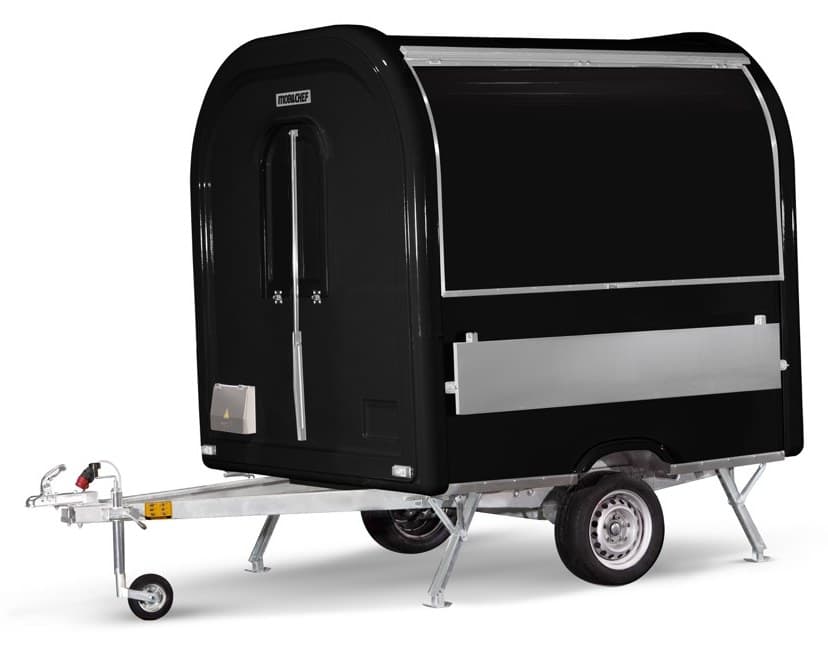
- Category O1Trailers of up to 750 kg maximum mass: the AIR 220 format.
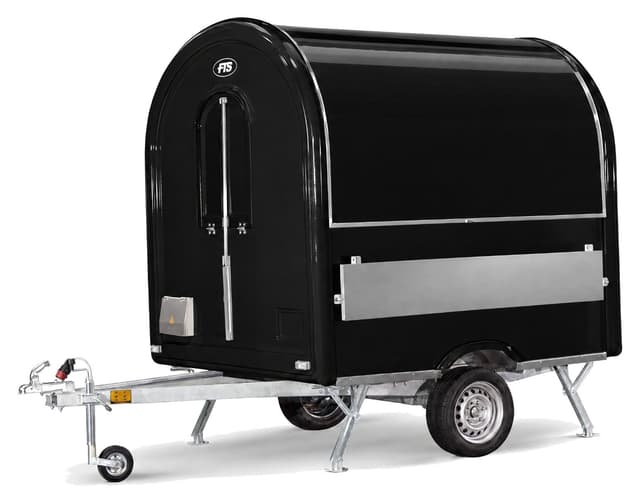
- Category O2Over 750 kg and up to 3,500 kg: the braked BOLD 270, at 1,000 or 1,500 kg.

Ireland: no registration up to 3,500 kg.
In Ireland, light trailers of up to 3,500 kg, O1 and O2, need neither registration nor licensing, and only heavier trailers have to pass the roadworthiness test (CVRT). Every new light trailer sold since 29 October 2012 must be plated and type-approved and come with a certificate of conformity, and the speed limit when towing a light trailer is 80 km/h (RSA, laws on using light trailers). If the trailer hides the car’s number plate, it must carry a plate with the towing car’s number: the RSA exempts only trailers under 750 kg, so fit one on the AIR 220 too.
Up to 3,500 kg in Ireland: no registration, no annual tax, no test.

Nordic countries: every trailer is registered.
Denmark (Registration Act), Sweden (Transportstyrelsen), Norway (Vehicle Use Regulations, § 2-2) and Finland (Traficom) register every trailer towed by a car, whatever its weight. Norway is not in the EU but is part of the European Economic Area, where EU type-approval is also valid. Here are the steps with the COC in each country (sources: Denmark, Sweden, Norway, Finland):
- DenmarkA new EU type-approved trailer is registered without an inspection, once its COC is entered in the vehicle register.
- SwedenAn origin check with the original COC, then the new trailer is identified at an inspection station, with no technical test.
- NorwayCustoms clearance first, then registration on the strength of the EU type-approval and the COC.
- FinlandA registration inspection at an inspection station, then first registration with its own plates.

Periodic tests, country by country.
Periodic tests are where the rules vary most from one country to the next, and they add to a trailer’s running costs (Denmark, Sweden, Norway, Finland, Italy). Check with your testing authority before you plan your first season.
- Noneup to 3,500 kg in Ireland, and in Denmark and Norway without the Tempo 100 approval
- 48 monthsuntil a light trailer’s first test in Sweden, then every 24 months
- 2 yearsbetween tests for an O2 trailer in Finland, such as the BOLD 270
- 4 yearsuntil a trailer’s first test in Italy, then every 2 years
Southern Europe: weight makes the difference.
Spain does not register a trailer of up to 750 kg but issues it with an ITV card (General Vehicle Regulation), Italy registers every trailer (Highway Code, art. 93) and Portugal every trailer over 300 kg (Road Code, art. 117). In Spain, periodic ITV tests for trailers are governed by Royal Decree 920/2017.
- Spain: AIR 220No registration of its own and a rear plate showing the car’s number, but its own ITV card; no periodic ITV.
- Spain: BOLD 270Registered at the Jefatura Provincial de Tráfico, with its own plate; an ITV every year until it is 10 years old.
- ItalyIts own registration document and rear plate, issued by the Motorizzazione Civile, whatever its weight.
- PortugalIts own registration and plate above 300 kg gross weight, including the AIR 220.

Later conversions need a new approval.
In the countries we have checked, converting a vehicle after registration requires a new approval: a “reforma” with an ITV inspection in Spain, light trailers included (Royal Decree 866/2010), a “visita e prova” in Italy (Highway Code, art. 78), and an authorised “transformação” in Portugal, where the vehicle is otherwise impounded until it passes an extraordinary inspection (Road Code, art. 115). A new trailer delivered fully fitted, with its COC, needs no conversion.
A new trailer comes with its papers.
A converted vehicle means an approval file, tests and new papers; a new trailer comes with its COC, ready to be registered wherever your country requires it. Check that your car can tow it with the free car check in the FTS Academy, read our guide to the 750 kg food truck trailer and browse our food truck trailers.
Papers in order, ready for the first service.
Your questions answered.
Got another question? Just ask us ›It depends on the country. In Ireland, no trailer of up to 3,500 kg is registered; in Denmark, Sweden, Norway, Finland and Italy, every trailer is; in Spain, those over 750 kg; in Portugal, those over 300 kg.
The European Certificate of Conformity, issued for each type-approved vehicle. A trailer subject to type-approval is registered with it, and no EU country may refuse to register a conforming trailer (Regulation (EU) 2018/858).
Not in Ireland up to 3,500 kg, nor in Denmark and Norway without the Tempo 100 approval. In Sweden, a light trailer is first tested within 48 months, then every 24; in Finland, an O2 trailer every 2 years; in Italy, after 4 years, then every 2; in Spain, the BOLD 270 every year until it is 10 years old.
Yes: Norway is in the European Economic Area, where an EU type-approval is valid. The trailer is cleared through customs, then registered with its own plate on the strength of its COC.
In the countries we have checked, yes: a “reforma” in Spain, a “visita e prova” in Italy, an authorised “transformação” in Portugal. A new trailer delivered fully fitted, with its COC, needs no conversion.
 By Romain, founder