Caravan food truck: can you convert a caravan?
Thinking of turning a caravan or a horsebox into a food truck? What the papers, hygiene rules and weight limits require in each country, and the alternative.
 Romain BarreauFounder of Food Truck Store · 5 min read
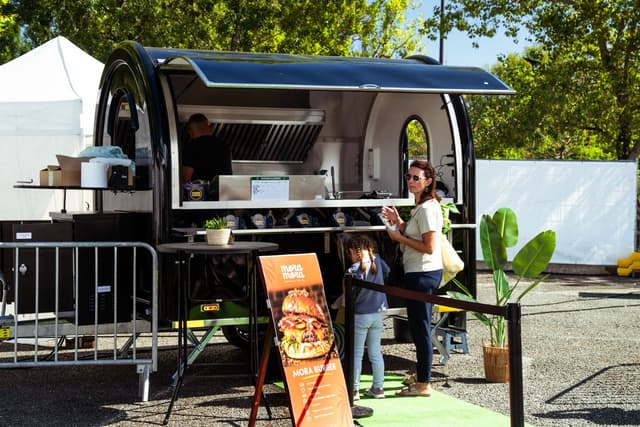
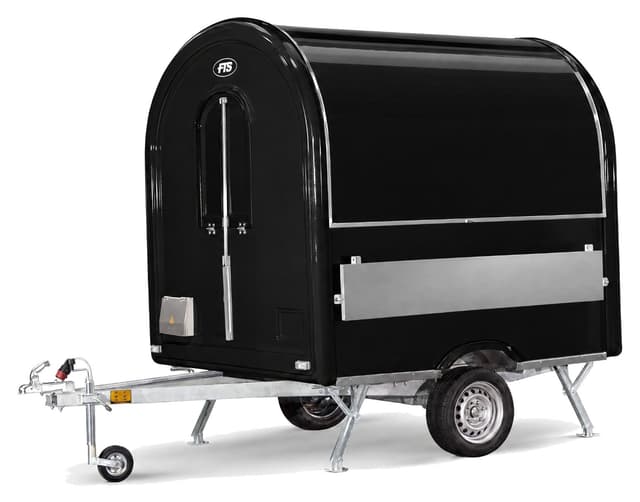
A caravan food truck is an appealing idea: rounded lines, a serving hatch in the side, a queue outside. Many people look for a touring caravan or a horsebox to turn into a crepe, burger or coffee business. Before you buy, here are the rules, the work involved and the alternative: a trailer designed for selling food.
Start with the papers.
In Ireland, a light trailer of up to 3,500 kg is neither registered nor taxed, but every new light trailer sold since 29 October 2012 must be plated and type-approved and come with a certificate of conformity (RSA).
Elsewhere, the papers also state what kind of vehicle it is: Italy’s highway code, for example, puts a caravan, equipped for living in when parked, in a separate class from special-use trailers (Codice della strada, art. 56). With any converted caravan for sale, read the papers first, then check the rest with our guide Second-hand or new food truck.
Conversions need approval first.
In several countries, including Denmark, Finland, Norway, Italy, Spain and Portugal, a conversion that changes the vehicle must be inspected or approved before it goes back on the road.
- Ask first
Run your plans past your registration authority before you buy.
- Convert, then have it inspected
Where required, the inspection or approval comes after the work.
- Update the papers
If the trailer is registered, its papers must match what it has become.
- Tell your insurer
Your insurer will not treat a kitchen with gas and customers like a holiday caravan, so tell them in writing before you convert.
A caravan is not a kitchen.
A mobile food outlet must follow EU hygiene rules (Regulation (EC) 852/2004, annex II, chapter III). In Ireland, the FSAI expects a food trailer to be purpose-built or properly converted (FSAI Guidance Note 16, 5.2).
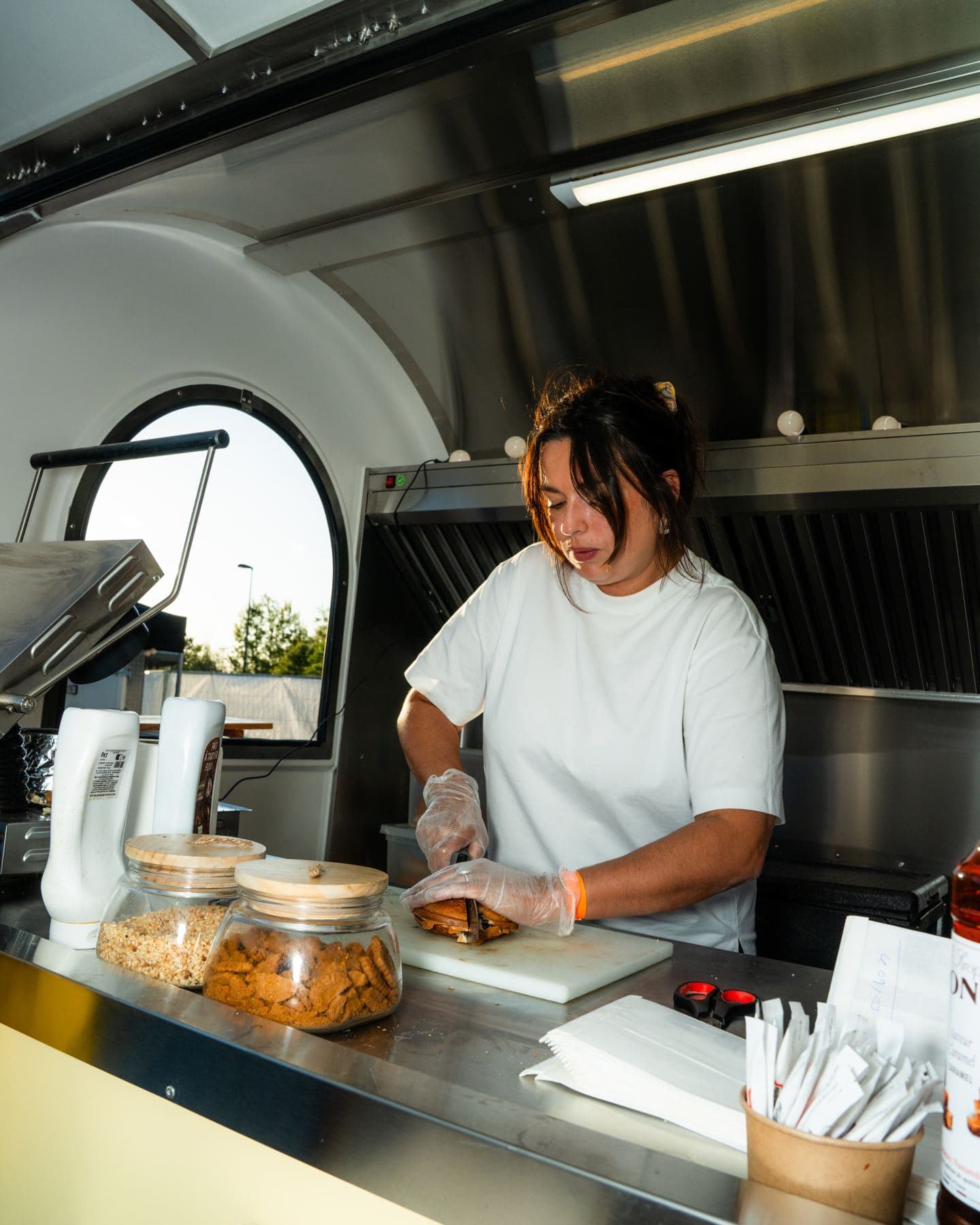
Stainless steel, water and extraction: a kitchen designed for service.
Gas must be refitted and inspected.
EU law covers the gas appliances; the installation and its checks are up to each country (Regulation (EU) 2016/426, art. 3(3)). Have the installation redone and inspected by a qualified professional in your country.
Horseboxes follow the same rules.
Turning a horsebox into a catering trailer is popular too. The kitchen, water, stock and gas all count towards the maximum authorised mass, which also decides the licence you need (Directive 2006/126/EC, art. 4(4)).
All the charm, none of the rebuild.
A converted caravan’s charm is really its shape and colours. Every one of our models comes in five colours, and a professional wrap does the rest; underneath, you have an Essentiel AIR 220 at 750 kg, towed on a category B licence and delivered with a European Certificate of Conformity.
The budget, item by item.
We won’t price a conversion: it depends too much on the caravan you start with and the tradespeople you use. Get a written quote for each item, then compare the total with a new Essentiel AIR 220, from €11,500 excl. VAT.
- The caravanThe purchase, then the chassis, axle, tyres, brakes and watertightness.
- The kitchenStainless steel worktops, water, tanks, refrigeration, the hood and its outlet.
- Power and gasElectrical and gas installations, each with its own paperwork.
- The papersApproval or inspection, updated papers, insurance.

Choosing with your eyes open.
If you want the look, a trailer designed for selling food gives it to you without the rebuild. Browse our food truck trailers, find your layout with the Academy quiz, or read what an empty food trailer still needs.
Designed for service from day one.
Your questions answered.
Got another question? Just ask us ›Yes, as long as the paperwork keeps up: where your country requires it, the conversion must be inspected or approved before you take it on the road. The kitchen must also meet the hygiene rules for mobile food outlets, and the loaded caravan must stay within its maximum authorised mass.
It depends on your country. Before it goes on the road, a conversion needs a registration inspection in Denmark when the vehicle type changes (BEK 1685/2025, §§ 5 and 6), a muutoskatsastus in Finland (Traficom), approval after conversion in Norway (Statens vegvesen), a visita e prova in Italy (art. 78), a reforma with an ITV inspection in Spain (Royal Decree 866/2010) and an authorised transformação in Portugal (Highway Code, art. 115). In Ireland, a light trailer is not registered, but the FSAI expects a food trailer to be purpose-built or properly converted.
The papers and the maximum authorised mass, the approval of the conversion where your country requires one, the gas and electrical installations, the hood if you cook, and the condition of the chassis and the body.
Where necessary, it needs hand-washing facilities, drinking water, smooth washable surfaces, and a way to deal with waste and keep food at the right temperature. In Ireland, the FSAI also expects a canopy over the cooking appliances.
Yes, with the same steps as a caravan: the papers, approval of the conversion where required, a kitchen that meets the hygiene rules, and gas installed by a qualified professional in your country. A horsebox is made for animals, so the floor, walls and vents have to give way to washable surfaces, water, refrigeration and a serving hatch.
Yes, up to 750 kg, or if the car and caravan together come to no more than 3,500 kg maximum authorised mass, as long as your car is rated to tow it. Above that, you need a BE licence or code 96, which covers up to 4,250 kg combined; what code 96 takes (training, a test or both) depends on your country.
 By Romain, founder